
Choosing the right kitchen cabinet shapes both the daily function and long-term value of your home. The market reflects this importance, with the 2025 kitchen cabinet industry valued at USD 91.41 Billion and projected to grow at a 5.22% CAGR through 2031. Meanwhile, consumer investment in kitchen remodels continues climbing, with median spending reaching $55,000 in 2024—a 22% year-over-year increase. However, industry data shows cabinet sales declined 6.5% through October 2025, signaling a cautious market where smart selection matters more than ever. This kitchen cabinets guide serves as your practical design guide and kitchen cabinet buying guide. You will learn to evaluate construction quality, understand style options, and budget realistically. Whether you plan a full kitchen remodel or simply explore refreshing your space, this resource equips you for confident decisions. Your journey toward selecting new cabinets starts here, with clear, actionable insight for every cabinet consideration.
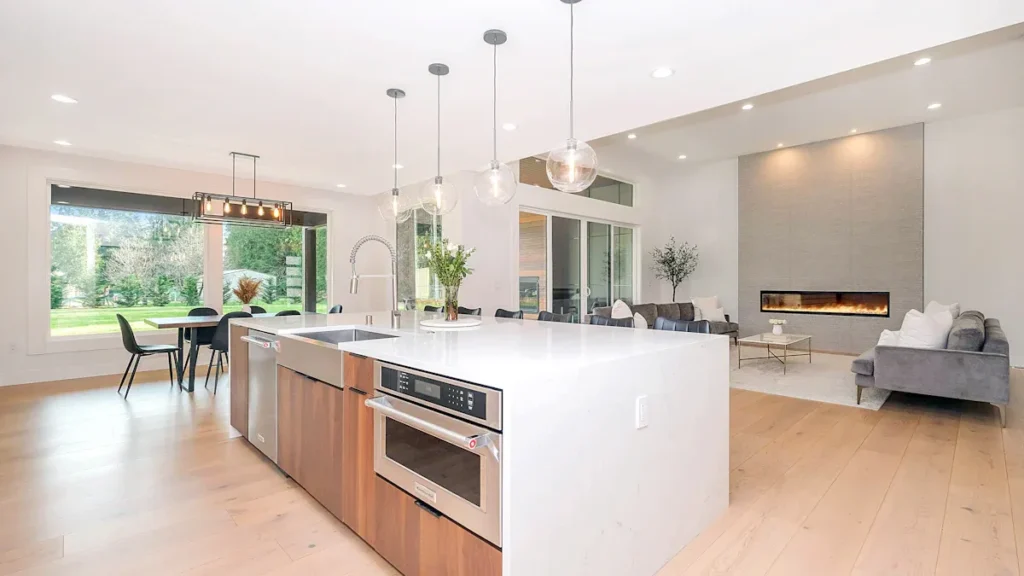
Key Takeaways
- Choose semi-custom cabinets for the best balance of cost, quality, and personalization.
- Select plywood boxes over MDF for better durability and moisture resistance.
- Shaker and flat-panel styles offer timeless appeal and fit many design themes.
- Inspect dovetail drawer joints and soft-close hardware for long-lasting performance.
- Budget for hidden costs like installation and delivery, which add 10-20% to your total.
- Invest in functional features like pull-out shelves and organizers over decorative details.
- Avoid following trends; prioritize timeless design and practical layout for lasting value.
- Measure carefully and plan for appliances to prevent costly mistakes during installation.
Types of Kitchen Cabinets and Quality Grades
When you start planning your kitchen remodel, understanding the different types of kitchen cabinets becomes your first critical step. The three main categories of the basic types of kitchen cabinets are stock, semi-custom, and custom. Each option serves different needs, budgets, and timelines. This section serves as your kitchen cabinets guide to help you navigate these choices. These three types of kitchen cabinets each offer distinct advantages depending on your project requirements.
Stock, Semi-Custom, and Custom Options
Defining the Three Main Categories
Stock cabinets represent the most accessible entry point among the basic types of kitchen cabinets. Manufacturers produce these in standard sizes, typically in 3-inch increments. You choose from a limited selection of door styles and finishes. These cabinets sit in warehouses ready for immediate purchase. Your choice among the types of kitchen cabinets depends on your budget and timeline.
Semi-custom cabinets offer more flexibility. You can adjust sizes in 1-inch increments. Hundreds of door styles and dozens of finishes become available. Interior accessories like pull-outs and dividers let you personalize storage. Semi-custom options represent a middle ground between the basic types of kitchen cabinets and fully bespoke solutions.
Custom kitchen cabinets provide unlimited design freedom. You specify exact dimensions down to 1/16-inch precision. Any color, stain, or custom match becomes possible. These cabinets accommodate irregular layouts like curved walls or sloped ceilings. Custom kitchen cabinets represent the highest tier of the basic types of kitchen cabinets.
Pros and Cons for Your Project
| Dimension | Stock | Semi-Custom | Custom |
|---|---|---|---|
| Customization Flexibility | Fixed 3-inch size increments; no alterations; limited to 5-10 standard colors | Adjustable in 1-inch increments; hundreds of door styles; dozens of finishes | Unlimited design freedom; exact specifications to 1/16-inch precision |
| Materials | Particleboard boxes; laminate or thin wood veneer | Plywood box construction; solid wood frames; dovetail drawer construction | Solid wood throughout or premium plywood; hand-selected exotic wood species |
| Construction Quality | Basic overlay hinges; stapled joints; lifespan 10-15 years | Concealed European soft-close hinges; dovetail drawers; lifespan 20+ years | Dovetail joinery; mortise-and-tenon joints; 5-7 coats of finish; lifespan 25+ years |
Semi-custom cabinets are worth the money for most homeowners because they balance cost, quality, and personalization better than stock or fully custom options. High-grade cabinets feature all-plywood construction, full-height backs, dovetail hardwood drawers, soft-close hardware, and factory assembly for durability and precision. These materials and construction methods support long-term performance and resale value in premium kitchens.
Brands like HenLeap Home offer semi-custom options that provide this balance of quality and affordability. Their cabinets include dovetail drawers, soft-close doors, and reinforced construction as standard features.
Lead Times and Availability
| Cabinet Type | Price Range (per linear ft) | Lead Time |
|---|---|---|
| Stock | $100–$300 | Days–2 weeks |
| Semi-Custom | $150–$650 | 4–8 weeks |
| Custom | $500–$1,200+ | 8–12 weeks |
Stock cabinets arrive fastest. Semi-custom requires planning ahead. Custom kitchen cabinets demand patience but reward you with precision. Understanding the basic types of kitchen cabinets helps you align your timeline with your project goals.
Decoding Cabinet Construction and Materials
Plywood vs. MDF for Cabinet Boxes
The material inside your cabinet box matters more than the door style. Two common options exist for a quality kitchen cabinet: plywood and MDF (medium-density fiberboard). Here is how they compare:
- Strength: Plywood is very strong; MDF is moderate.
- Moisture resistance: Plywood is good; MDF is poor and swells easily.
- Screw holding: Plywood is excellent; MDF is weak at edges.
- Weight: Plywood is lighter; MDF is heavier.
- Paint finish: Plywood is good; MDF is excellent and very smooth.
- Cost: Plywood is higher; MDF is lower.
- Best use: Plywood for cabinet boxes; MDF for cabinet doors and fronts.
- Longevity: Plywood lasts decades with care; MDF has shorter lifespan in wet conditions.
For the best kitchen cabinets, choose plywood boxes. The higher upfront cost pays off through decades of reliable service. In high-moisture areas like kitchens and bathrooms, plywood outperforms MDF consistently.
The Importance of Finish and Veneer Quality
The finish on your cabinets determines how they look and last. Thin veneer under a millimeter cannot be sanded for repairs. Deep scratches or chips become impossible to fix invisibly. This reduces both lifespan and appearance.
Topcoat quality matters for resistance to sunlight, moisture, and scratches. A UV-resistant topcoat prevents fading. A durable topcoat extends lifespan. Edge sealing is critical near sinks and dishwashers. Moisture can lift the veneer, directly affecting durability and appearance.
2026 trends show consumers favoring flat-panel doors for their clean lines and easy maintenance. Shaker cabinets remain popular for their adaptability to both open-concept and defined spaces. Inset cabinets attract those seeking a high-end, furniture-like appearance. These stylistic preferences influence how you choose among the types of kitchen cabinets available today.
When you evaluate the basic types of kitchen cabinets, inspect the finish quality closely. Look for smooth, even coverage. Check edges for proper sealing. The best kitchen cabinets combine quality construction with a robust finish that protects your investment for years.
Exploring Kitchen Cabinet Styles for Your Design
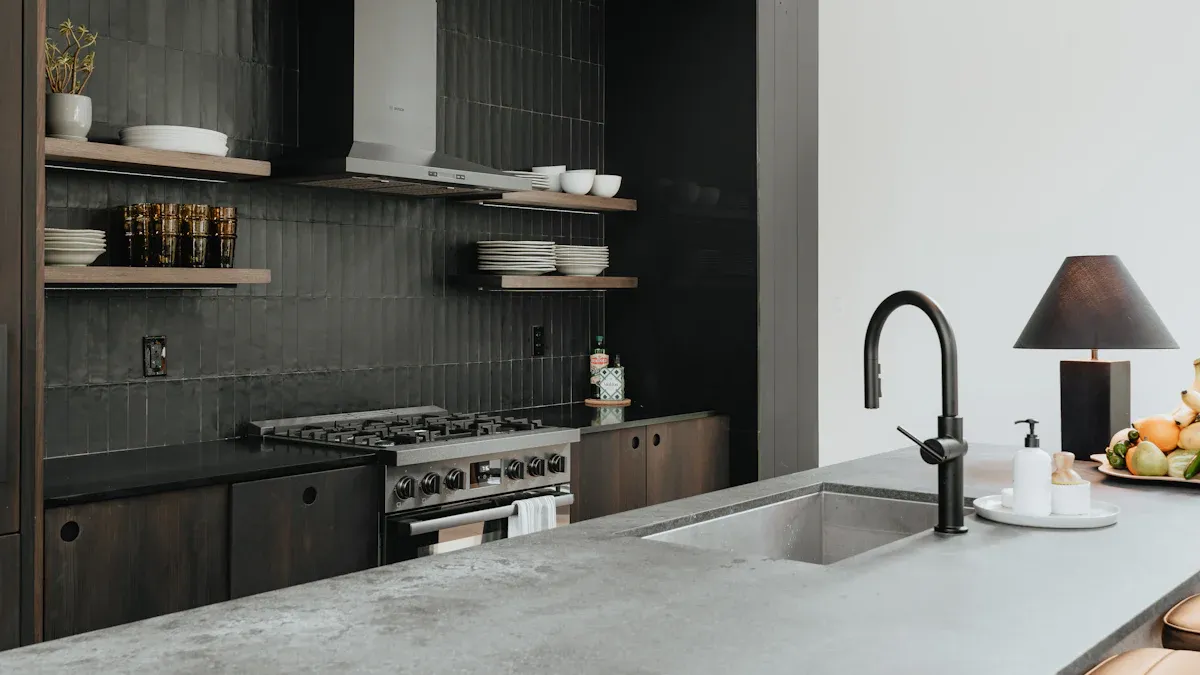
Your choice of kitchen cabinet styles shapes the entire character of your room. Understanding these options helps you select the look that fits your home. The most popular kitchen cabinet styles in 2026 reflect a clear direction. Shaker remains the most installed style, serving as the universal default. Slim Shaker, with its narrowed frame, is the breakout style of 2026. Flat-panel doors are gaining the fastest momentum, with 69% of design pros identifying them as the rising trend. Inset cabinetry continues to gain traction for heirloom-quality spaces. A well-chosen kitchen cabinet combines durability with aesthetic appeal. These kitchen cabinet styles work across different design themes and budgets. Knowing the types of kitchen cabinets available helps you narrow your choices.
The Timeless Appeal of Shaker and Flat-Panel
Shaker: Versatile and Classic
The Shaker style originated with the Shaker religious community in the late 18th century. They believed beauty lies in utility. This philosophy resulted in a five-piece door with a flat panel center, straight lines, and minimal ornamentation. The recessed panels create subtle shadow lines that add visual interest without overwhelming the space. This minimalist approach explains why the Shaker style has endured through countless trends. The shaker style fits with a warm, down-to-earth feel. It pairs well with matte black hardware, quartz, and neutral palettes. Shaker cabinets work in modern kitchens, transitional kitchens, farmhouse kitchens, minimalist settings, and industrial-inspired spaces. The balanced proportions and symmetry create a calm, orderly look. The recessed panel construction provides resistance to force and bending. This robustness makes the shaker style a practical choice for busy kitchens. When you review the types of kitchen cabinets, Shaker offers the most versatile option across style themes.
Flat-Panel: Modern and Minimalist
Flat-panel units feature sleek, flat surfaces without decorative elements. The absence of ornamentation creates a clean canvas for your kitchen. This style shines brightest in contemporary settings. It fits well in Scandinavian, contemporary, and industrial spaces. Sixty percent of NKBA designers cite minimalist design as dominant for the next three years. This trend drives the rising popularity of flat-panel doors. The easy-to-clean flat surfaces make maintenance simple. You just wipe the smooth surface without dealing with recessed areas that collect dust. Flat-panel units work in transitional spaces, especially when mixed with other styles. This kitchen cabinet style delivers a streamlined look that feels current and uncluttered. When you evaluate the types of kitchen cabinets for a modern home, flat-panel deserves serious consideration.
Making a Statement with Raised Panel and Inset
Raised Panel: Traditional and Ornate
Raised panel options feature a raised center panel with beveled edges. These edges add dimensional depth to each door. The result is a traditional and elegant look. This style suits traditional or classically styled spaces well. The detailed construction with ridges and valleys does gather more dust and dirt. You need more frequent cleaning to maintain the appearance. Raised panel options typically cost more than Shaker cabinets due to the complex construction process. Their traditional style may not be as adaptable to a wide range of buyer preferences. This factor can affect resale appeal in some markets. When you explore the types of kitchen cabinets, raised panel remains a strong choice for period-appropriate designs.
Inset: Precision and Craftsmanship
Inset units create a flush, furniture-like appearance. The doors sit inside the cabinet frame rather than overlaying it. This approach delivers crisp lines and balanced symmetry. The look is timeless and high-end. Inset cabinetry requires skilled labor with experience in three-dimensional hinge adjustment. The cabinet boxes must be square within fractions of a sixteenth of an inch. A misalignment of 1/16 inch is immediately visible. Professional installation is critical because overlay styles are more forgiving of minor imperfections. The small ledge between door and frame collects dust and debris. Humidity fluctuations cause wood expansion and contraction, leading to door binding. You should maintain indoor humidity between 35–55% to reduce alignment drift. Check doors twice yearly and after seasonal changes. Inset options cost 15–30% more than overlay cabinets. The payoff is a premium look that buyers associate with custom craftsmanship. This kitchen cabinet style suits luxury homes, traditional or transitional spaces, and custom projects.
Matching Style to Your Kitchen’s Scale and Light
Considering Proportions and Ceiling Height
The cabinet style you choose affects how your kitchen feels. Taller spaces can handle bolder cabinet styles with more detail. Raised panel options add visual weight that suits generous proportions. Inset options, with their precise lines, complement balanced, symmetrical spaces. Shaker styles work in almost any ceiling height because their clean lines do not overwhelm. For kitchens with lower ceilings, flat-panel options create a seamless look that does not cut the room visually. The simpler the cabinet style, the more it recedes, making the space feel larger. When you select among the types of kitchen cabinets, consider the overall proportions of your room.
How Style Impacts Perceived Space
Dark, heavy units absorb light and make a space feel smaller and dimmer. Lighter tones such as whites, soft grays, or natural wood options reflect light and brighten the room. Glass-front cabinetry allows light to flow through, adding openness. Bright spaces benefit from darker tones, while areas with less natural light should consider lighter neutrals to prevent a cave-like feel. Glossy surfaces reflect light, enhancing brightness in a kitchen. Matte surfaces offer a softer, understated elegance. The cabinet style you choose works together with the selected finish to shape the room’s character. The shaker style in a light color with a soft-close mechanism combines timeless aesthetics with modern convenience. This thoughtful combination of cabinet style and finish creates a kitchen that feels both beautiful and functional.
Key Construction Features and Hardware to Inspect
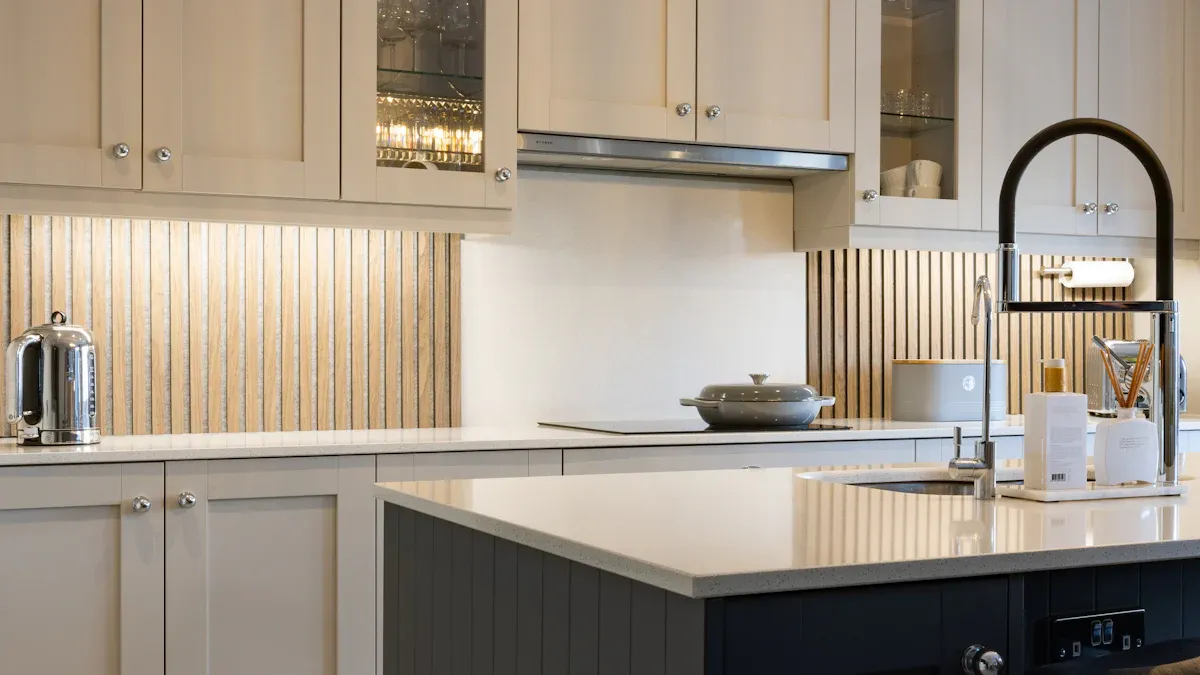
When you evaluate a kitchen cabinet, the construction details determine how long it will serve you. These kitchen cabinet features separate durable products from those that fail early. You can inspect most of these features in a showroom without special tools.
Evaluating Drawer Construction and Joinery
Dovetail vs. Butt Joints
The drawer joint is the first thing you should examine. Dovetail joints interlock like fingers, creating a mechanical bond that resists pulling and twisting. In comparative testing, dovetail joints achieve high durability and excellent weight capacity. Butt joints score low in durability and only fair in weight capacity.
Dovetail joints provide 3–5 times more holding strength than stapled butt joints. They support larger loads without failing. The interlocking design prevents loosening over time. Butt joints rely on glue or screws, offering minimal structural integrity. Glued-only joints fail sooner under daily use.
When you inspect drawers, look for solid wood boxes with dovetail joinery. Avoid particleboard drawers with stapled corners. Test the drawer by pulling it fully open and applying pressure. A quality cabinet drawer feels solid and moves smoothly without wobble.
Soft-Close vs. Self-Closing Mechanisms
Soft-close mechanisms use hydraulic dampers to slow the drawer before it closes. This prevents slamming and reduces wear on the joint. Self-closing mechanisms pull the drawer shut once it reaches a certain point. Both features protect your investment, but soft-close offers gentler operation.
Higher-quality cabinets, such as those from HenLeap Home, include soft-close doors and drawers as standard features. These mechanisms extend the lifespan of your drawers and reduce noise in your kitchen. Test the mechanism by closing the drawer slowly and quickly.
Door Construction and Hinge Quality
Framed vs. Frameless Cabinets
Framed cabinets have a face frame that ties the box together and adds stiffness. This frame provides a wider surface for door hinges, reducing stress on mounting points. Framed construction allows a wider variety of hinge types, including decorative options.
Frameless cabinets mount doors directly to the box sides using concealed hinges. These hinges are adjustable and invisible when closed. Frameless construction relies entirely on the cabinet box for structural integrity. This requires thicker panels, usually 5/8 inch or 3/4 inch, to compensate for the absence of a frame.
Choosing the Right Hinges for Longevity
Concealed European hinges offer adjustability in three dimensions. You can fine-tune door alignment after installation. This adjustability proves valuable as your kitchen settles over time. Look for hinges with a soft-close feature integrated into the mechanism.
Check the hinge mounting by opening and closing the door several times. A quality hinge operates smoothly without binding. The door should stay in position at any angle. Poor hinges cause doors to sag or misalign, leading to premature wear.
Hardware as the Finishing Touch
Knobs, Pulls, and Handles
Hardware completes your cabinet design. Weight serves as a quality signal. Heavier pieces typically indicate solid construction rather than hollow cores. Solid brass or stainless steel hardware resists corrosion and wear, maintaining functionality for 15–25 years. Plated steel chips easily and rusts quickly, needing replacement in 3–5 years.
Selecting Finishes that Complement Your Design
The finish on your hardware matters as much as the material. PVD matte finishes offer excellent abrasion resistance and high fingerprint resistance. Darker finishes like matte black conceal fingerprints and scratches better than lighter options.
Choose hardware that complements your cabinet finish and overall design. The right hardware ties your kitchen together visually while providing reliable daily function. These kitchen cabinet features work together to create a space that serves you well for decades.
Budgeting for Your Cabinets and Where to Invest
Your kitchen renovation budget determines which types of kitchen cabinets you can consider. Understanding realistic cost ranges helps you plan without surprises. This section breaks down pricing, hidden expenses, and smart investment strategies.
A Realistic Look at Cost Ranges
Price Breakdown by Cabinet Type
The types of kitchen cabinets you choose directly affect your total investment. Stock options cost $100–$300 per linear foot. Semi-custom ranges from $150–$650. Custom kitchen cabinets start at $500 and can exceed $1,200 per linear foot. Luxury custom kitchen cabinets may surpass $1,500 per linear foot.
For a full kitchen, these numbers add up quickly. A small 10×10-foot kitchen with custom kitchen cabinets costs $15,000–$20,000. A medium 10×15-foot space runs $18,000–$35,000. Large kitchens with islands reach $30,000–$50,000 or more. These figures help you set realistic expectations before you visit a showroom.
| Cabinet Type | Price Range (per linear foot) | Key Considerations |
|---|---|---|
| Stock | $100–$300 | Fixed dimensions; limited finishes; separate installation and delivery costs |
| Semi-Custom | $150–$650 | 4–8 week production; costs rise with specialty woods, painted finishes, and soft-close hardware |
| Custom | $500–$1,200+ | Fully bespoke design; highest labor and material costs; installation conditions can shift the final total |
Hidden Costs: Installation and Delivery
Your kitchen cabinet budget needs room for more than the cabinets themselves. Floor and wall repairs often appear once old units come out. Electrical relocations add expense. Filler panels, crown returns, and temporary kitchen solutions are common hidden costs. Professional installation typically adds 10–20% to your total. Delivery fees vary by distance and order size. Always request a detailed quote that itemizes these line items before committing.
Smart Strategies for Maximizing Your Budget
Prioritizing Functionality Over Frills
Smart storage features deliver the most daily value. Deep drawers, pull-out shelves, and built-in organizers add function you use every day. Buyers actively seek homes with these features already installed. LED undercabinet lighting adds $500–$1,500 in perceived value for a modest cost. Open concept designs and island additions command premiums of $5K–$15K and $3K–$8K respectively. Invest in these functional upgrades before spending on decorative details.
Mixing Cabinet Lines for Cost Efficiency
You can combine different types of kitchen cabinets in one project. Use custom kitchen cabinets for challenging corners or specialty storage. Choose semi-custom or stock options for straight runs where standard sizes fit. This approach stretches your kitchen renovation budget while delivering quality where it matters most. Many homeowners apply this strategy to afford premium features throughout their kitchen.
The Value of Investing in Quality
Long-Term Durability and Resale Value
Quality construction directly impacts how long your cabinets last. Builder-grade stock units typically serve 10–15 years. Upgraded stock or mid-range options last 15–25 years. Custom or high-end cabinets endure 30 years or more. According to Zillow, a minor kitchen remodel can earn a return on investment up to 113%. A large portion of that value comes from cabinetry improvements. The U.S. cabinet industry is valued at $22.1 billion in 2026, reflecting significant homeowner investment in this area.
Exploring Premium Options from Brands like HenLeap Home
Brands like HenLeap Home make premium features more attainable. Their semi-custom options include soft-close doors and drawers, reinforced construction, and dovetail drawer joints as standard. These features typically appear only in higher-priced lines. HenLeap Home offers these quality features at accessible price points. You gain the durability and finish of premium cabinets without the custom price tag. This approach lets you invest in quality while respecting your kitchen renovation budget.
Avoiding Common Kitchen Cabinet Mistakes
Many homeowners make costly errors when selecting new cabinets. You can avoid these by understanding the common pitfalls. The types of kitchen cabinets you choose must serve your daily routine. Let us examine each mistake and how to prevent it.
The Pitfall of Following Trends Over Function
Why Timeless Design Wins in the Long Run
Trend-driven kitchen cabinet styles age faster than neutral, timeless foundations. Minimalist cabinetry maintains relevance across design eras. A neutral base with distinctive details allows your kitchen to evolve. Finishes stay relevant even as your décor changes. This approach avoids premature obsolescence. Trend-driven designs require more frequent updates because they tie to changing tastes. Timeless choices reduce the likelihood of future renovations driven solely by style changes. When you evaluate the types of kitchen cabinets, focus on enduring value rather than passing fads. A well-chosen foundation serves you for decades.
Balancing Personal Style with Practicality
Prioritizing looks over function creates a kitchen that frustrates daily. Focus on pull-out storage systems, vertical storage, and smart organizers. Ensure your layout matches your cooking style. Function should come first, then style. Carrie Moon, a cabinet design expert, explains that poor zone planning undermines the efficiency and enjoyment of your kitchen space. If prep and cooking zones are not well arranged, you waste time and energy. The National Kitchen and Bath Association defines the kitchen work triangle connecting sink, refrigerator, and stove. Triangle legs should be no less than 4 feet and no more than 9 feet. The total perimeter should stay under 26 feet. Blocking this triangle with poorly placed cabinets or islands disrupts workflow. Your cabinet style decision must respect how you move through the space. The best kitchen cabinet styles combine beauty with practical function. Choose quality materials like solid wood or plywood boxes. Strong joinery such as dovetail drawers ensures durability. Avoid cheap particleboard that warps or breaks easily.
Ignoring Scale and Proportion
The Impact of Cabinet Size on Room Flow
Cabinet size affects how your kitchen feels and functions. Oversized cabinets in a small room create a cramped feeling. Undersized options in a large space look awkward. Not taking accurate measurements leads to cabinets that do not fit. This causes delays and extra costs. Measure multiple times. Plan around windows, vents, and appliances. Consider door swings and traffic flow. A kitchen designer helps you spot issues you might miss. The right types of kitchen cabinets fit your room’s proportions exactly. Your kitchen should feel balanced and open.
Planning for Adequate Clearance and Storage
Maintain clear floor space and walkway widths with appliance doors fully open. In island layouts, open doors can block traffic. Plan landing areas beside refrigerators and ovens. Continuous counter surfaces support safe food prep and hot cookware placement. Think about how you use the space daily. Your kitchen should accommodate your cooking habits. The cabinet style you choose impacts how much storage you gain. Deep drawers and pull-out shelves add function you use every day. Consider adjustable shelving or modular inserts to adapt over time. Choose the types of kitchen cabinets that maximize your storage potential.
Overlooking the Details in the Planning Phase
Forgetting to Plan for Appliances and Fixtures
Finalize appliance selection before cabinet drawings. This step is especially important in remodels where structural flexibility is limited. Use actual manufacturer dimensions including width, height, and depth. Do not assume standard sizes. Even small variations affect casework alignment and hardware placement. Verify door swing, handle clearance, and required ventilation gaps for each appliance. This prevents collisions and airflow issues. Coordinate all clearance details between the kitchen designer, cabinet manufacturer, and general contractor during the design phase. Do not wait until construction starts. This applies especially to panel-ready or integrated appliances. Your cabinet planning must account for every fixture. Budget for hidden costs like floor leveling, electrical adjustments, and professional installation.
The Importance of a Detailed Layout and Measurement
A detailed layout prevents costly errors. Measure spaces multiple times. Consider the full picture including windows, vents, and appliances. A professional kitchen designer can catch issues you might overlook. The types of kitchen cabinets you select must match your exact measurements. Investing time in planning saves money and frustration later. Your kitchen should work for you, not against you. A thorough plan ensures every detail fits perfectly. Leave room for additional cabinetry if your needs change. This forward-thinking approach protects your investment.
Selecting the right cabinets balances style, quality, and budget. You must view this process holistically. The best choice fits your specific lifestyle and long-term needs. This kitchen cabinets guide walked you through defining requirements, evaluating construction, and avoiding common mistakes. Now you possess the knowledge to move forward confidently.
Take your time during selection. Research thoroughly. Trust your instincts when comparing options. A well-chosen cabinet system represents an investment in the heart of your home. Your kitchen deserves thoughtful consideration. Apply what you learned here, and you will create a space that serves you beautifully for decades.
FAQ
What are the three main types of kitchen cabinets?
Stock, semi-custom, and custom. These types of kitchen cabinets differ in customization and cost. Stock units come in standard sizes. Semi-custom options allow 1-inch adjustments. Custom cabinets offer unlimited design freedom for any layout.
Which cabinet box material delivers better durability?
Plywood outperforms MDF in strength and moisture resistance. Plywood holds screws securely and lasts decades with care. MDF swells in wet areas, making it better for doors only. Choose plywood boxes for long-term reliability in your space.
How do Shaker and flat-panel styles differ?
Shaker cabinetry features a recessed panel with clean lines for versatile design themes. Flat-panel cabinetry has smooth surfaces perfect for modern kitchens. Both types of kitchen cabinets offer timeless appeal. Choose based on your preferred aesthetic.
What drawer construction should you inspect?
Dovetail joints provide 3–5 times more holding strength than stapled butt joints. They resist pulling and twisting over time. Always check the drawer box before purchasing cabinets. This detail ensures long-term durability.
Are soft-close mechanisms worth the investment?
Yes. Soft-close hardware uses hydraulic dampers to prevent slamming. This reduces wear on drawer joints and extends lifespan. Brands like HenLeap Home include this feature as standard in their products.
What is the most common cabinet mistake?
Following trends over function. A kitchen that looks good but frustrates daily use wastes your investment. When evaluating types of kitchen cabinets, prioritize layout, storage, and workflow before choosing decorative details.