
Picture your kitchen transformed by lacquer kitchen cabinets. Their mirror-like gloss catches the light, creating a seamless, premium surface that instantly elevates the room. You admire this finish in magazines, yet you hesitate. Are these cabinets too delicate for your busy home?
This kitchen design guide offers you honest answers. You will learn what lacquer truly is, how it compares to painted cabinets, and which sheen suits your lifestyle. Designers and homeowners alike face this same decision.
You deserve clarity. By the end, you will confidently choose the right type, finish, and care routine. Your kitchen deserves this thoughtful consideration, whether you value beauty, durability, or budget.
Key Takeaways
- Lacquer cabinets offer a hard, glossy finish that resists moisture and scratches, making them a durable choice for kitchens.
- Post-catalyzed lacquer provides the strongest protection, ideal for busy households, while matte finishes hide fingerprints better than high-gloss.
- Lacquer costs more than painted cabinets but lasts longer (10-15 years vs. 5-10 years), offering better long-term value.
- Choose light colors for small kitchens to make them feel larger, and consider your natural light when selecting dark shades.
- Clean lacquer cabinets with mild soap and water, avoid harsh chemicals like bleach and ammonia, and use microfiber cloths to prevent scratches.
What Are Lacquer Kitchen Cabinets?
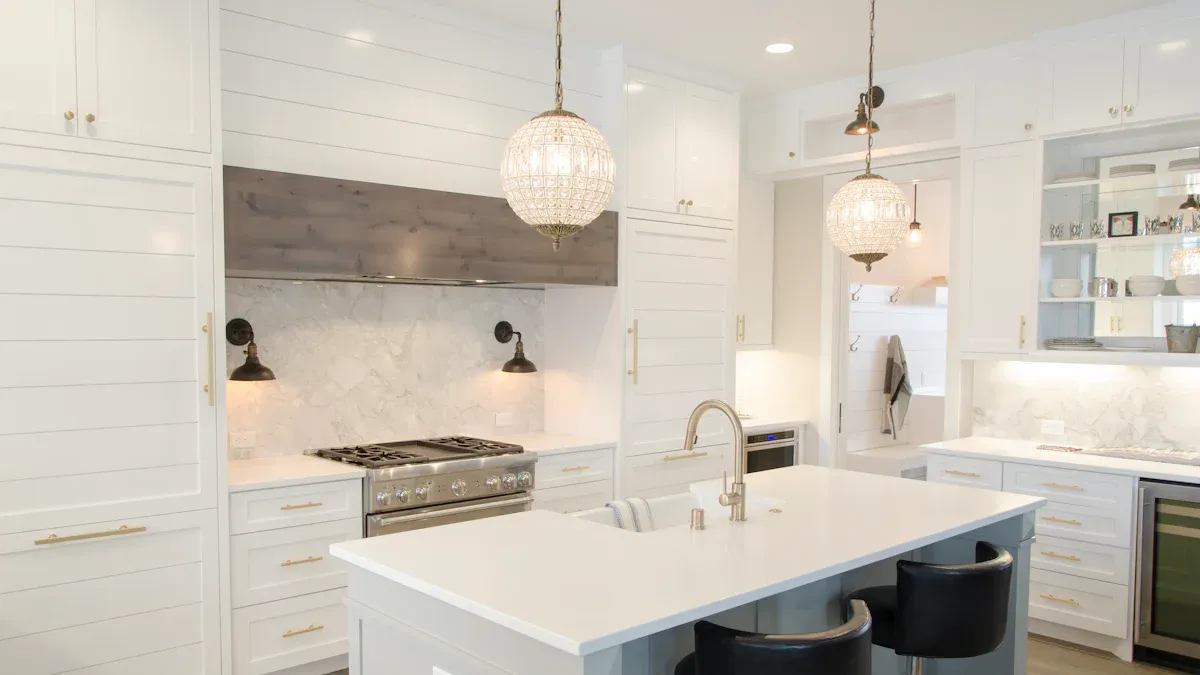
Lacquer kitchen cabinets feature a finish that combines hardness with a deep, reflective surface. This finish sets them apart from other kitchen cabinet finishes. You will find lacquer in many premium kitchens because it creates a seamless, almost liquid appearance. The material itself is a resin-based coating that dries to a tough, nonporous layer. This layer resists moisture and everyday wear. Unlike ordinary paint, lacquer bonds with itself as it cures. Each coat melts into the previous one. The result is a single, unified surface without brush marks or seams.
Types of Lacquer Finishes
You have three main options when selecting lacquer for your kitchen. Each type offers different levels of protection and longevity.
| Finish Type | Durability Description |
|---|---|
| Nitrocellulose | Traditional choice; yellows and crazes over time |
| Pre-catalyzed | Contains urea resins; significantly harder than nitrocellulose |
| Post-catalyzed | Hardest option; ideal for demanding kitchen environments |
Nitrocellulose lacquer remains in wide use today, particularly in custom furniture and cabinetry. This traditional finish delivers a beautiful, warm glow. However, it yellows and crazes as it ages. You might choose this option for a period-style kitchen where authenticity matters more than long-term durability.
Pre-catalyzed lacquer incorporates an acid catalyst that increases hardness. This finish resists moisture and chemicals better than nitrocellulose. You will find it offers satin, semi-gloss, or gloss sheens. It dries clear with minimal color shift. Local touch-ups become easier with this type compared to fully catalyzed systems.
Post-catalyzed lacquer provides the strongest protection. This finish withstands the daily demands of a busy kitchen. It resists scratches, moisture, and cleaning chemicals. For most homeowners, this type represents the best investment. Italian manufacturers like Arrital offer four distinct lacquer variants: matte, satin, gloss, and metallic. These finishes arrive in dozens of precisely calibrated tones, showing how seriously manufacturers treat this product category.
How Lacquer is Applied
The application process determines the final quality of your cabinet finishes. Professional application makes the difference between a factory-quality surface and a disappointing result. Lacquer dries quickly. A beginner using a brush will likely leave visible strokes. You need the right equipment and a dedicated spraying area to achieve a smooth finish.
The process follows a specific sequence:
- Apply a high-build primer designed for lacquer topcoats.
- Apply the color layers.
- Apply the protective catalyzed topcoat.
- Fine-sand each layer to ensure maximum mechanical bonding.
You will typically need two to three thin coats of lacquer. Each coat measures 4 to 5 mils wet. The surface dries to the touch in about 30 minutes. Full chemical cure takes 24 to 48 hours. Between each coat, you lightly scuff-sand the surface. This step ensures proper adhesion. Each coat then flows out into a smooth, even film.
The curing process matters for durability. Water-based lacquers offer twice the moisture resistance of traditional formulas when applied correctly. They require one to two weeks to fully cure. During this period, you should avoid placing items on the surfaces.
I would not recommend using a brush for lacquer finish if you are a beginner. Lacquer dries quickly, and without sufficient skill, you may end up with visible brush strokes.
Designers often specify post-catalyzed lacquer for kitchens because of its superior durability. This choice protects your investment for years. The nonporous surface makes wiping simple. You can clean spills quickly without worrying about staining. The finish also offers multiple shine levels, similar to paint. You can select from matte to high-gloss to match your design vision.
Lacquer vs. Other Kitchen Cabinet Finishes
When you compare lacquer kitchen cabinets to other options, you need to consider both performance and appearance. Two common alternatives stand out: painted cabinets and laminate or thermofoil finishes. Unlike stained cabinets, which show wood grain, lacquer creates a uniform, seamless surface. Each option serves different priorities. Your choice depends on how you balance durability, cost, and style. You need to understand these differences before you make your final decision.
Lacquer vs. Painted Cabinets
Painted cabinets have long been a standard in kitchen design. They offer classic charm and unlimited color options. However, the lacquer finish provides a harder, more resilient surface. This finish creates a nonporous protective layer. This layer makes your cabinetry easy to wipe clean. Painted cabinets, in contrast, are more prone to chipping over time. You will notice that painted cabinets absorb moisture more readily. The paint film can soften or peel when exposed to steam and grease.
Scratch resistance is another area where lacquer outperforms painted cabinets. This finish resists scratches and scuffs well initially. Your painted cabinets may show wear sooner in high-traffic areas. However, this advantage comes with a trade-off. The surface may become brittle as it ages. Cracking and chipping become possible in heavily used kitchens. Painted cabinets, on the other hand, are generally easier to touch up. You can sand a small scratch and repaint it quickly. Repairs require more skill and specialized products. You should consider your daily habits when weighing this trade-off.
Moisture resistance is critical for kitchen cabinet finishes. This finish provides excellent moisture resistance. This makes it ideal for areas with spills and humidity. Painted cabinets also resist moisture well, but they do not match the same performance. The key difference lies in the hardness of the coating. The finish dries to a tough, nonporous film. Paint remains slightly softer and more permeable. Consider your cooking habits when making this choice.
Yellowing is a concern for both finishes. Traditional lacquer may yellow over time, similar to varnish. Painted cabinets also yellow, especially in direct sunlight. White painted cabinets develop a warm, yellowish cast after several years. You can choose acrylic lacquer to avoid this issue. Acrylic formulations offer high durability and excellent moisture resistance. They do not yellow over time. This makes them a premium option for homeowners who want the best of both worlds.
The cost for lacquer and painted cabinets is similar. Both fall into the premium price range. You pay for the labor-intensive application process. For this finish, you need professional spraying equipment. For painted cabinets, you need careful sanding and priming. Your budget alone will not help you decide between these two kitchen cabinet finishes. Your priorities will. You will need to weigh the long-term value against the immediate expense.
Lacquer vs. Thermofoil and Laminate
Thermofoil and laminate finishes offer a more budget-friendly alternative. These kitchen cabinet finishes are durable, practical, and easy to clean. They resist scratches and stains well. Families with young children often choose laminate for its forgiving surface. However, thermofoil and laminate come with limitations. You cannot achieve the same seamless look. Laminate edges may show seams or start to peel. Thermofoil can delaminate in high heat or humidity.
This finish offers a truly premium, seamless appearance. You can apply it to curved panels and detailed profiles. This flexibility allows you to explore unique cabinet door styles. Laminate and thermofoil work best on flat surfaces. You lose the depth and reflection. The cost difference is significant. Laminate and thermofoil are budget-friendly options. This finish sits at the premium end of the price spectrum. You pay for the quality and craftsmanship that this finish represents.
For a modern kitchen, this finish delivers a contemporary luxury feel. Laminate and thermofoil offer more moderate luxury. You should choose laminate if you prioritize cost savings over custom appearance. You should choose this finish if you want a seamless, high-end look that reflects light beautifully.
Pros and Cons of Lacquer Cabinets
Aesthetic and Customization Benefits
You will notice an immediate difference when you install lacquer kitchen cabinets. The high-gloss finish creates a mirror-like surface that reflects light throughout your kitchen. This quality works exceptionally well in small or dimly lit kitchens. The finish amplifies both natural and artificial light sources. It creates depth perception that enhances the sense of space. Lighter hues like crisp whites and soft grays further amplify this spaciousness. Deeper tones add drama but reduce the brightness effect.
You also gain remarkable design freedom. You can choose from over 70 RAL colors in both matte and high-gloss finishes. You can pick whites, creams, vibrant yellows, reds, blues, greens, and greys. The color selection allows you to match other design elements precisely. Both designers and homeowners appreciate this flexibility. You can also apply this finish to curved panels and detailed profiles. This gives you more options for cabinet door styles compared to laminate or thermofoil.
Durability, Cost, and Repairability
You must consider the cost premium. Standard painted cabinets cost $3 to $10 per linear foot. Lacquer costs $5 to $15 per linear foot. For a full kitchen of 25 to 30 linear feet, expect to pay $1,500 to $5,000. This is $600 to $1,500 more than painting. The investment pays off over time. Lacquer lasts 10 to 15 years or more. Painted cabinets last only 5 to 10 years. The durability advantage justifies the extra upfront cost.
Post-catalyzed finish offers the best protection for busy kitchens. Unlike stained cabinets, which show wood grain, lacquer creates a uniform, seamless surface. This surface resists scratches and moisture. However, you can still chip the finish if you hit it hard enough. The repair process depends on the severity of the damage.
You can repair minor chips easily with a touch-up pen. For moderate chips that expose wood, follow these steps:
- Clean the chipped area with mild detergent and dry it.
- Sand the area with medium-grit sandpaper (120-grit) to smooth edges.
- Apply a thin coat of primer and let it dry.
- Lightly sand the primed area with fine-grit (220-grit) sandpaper.
- Apply matching finish in thin coats, following the wood grain, allowing each coat to dry.
- Apply additional coats (2-3 total) as needed.
- Sand lightly with fine-grit sandpaper and buff to a shine.
You may need to replace the cabinet door or panel for severe chips with large, deep damage. This repair process is more involved than touching up paint. But the superior finish quality makes it worthwhile for many homeowners. Your kitchen will benefit from the refined look for years.
Choosing the Right Sheen and Color

Lacquer Sheen Levels Explained
The sheen you select changes both the look and the daily reality of your kitchen. High-gloss lacquer creates that mirror-like surface you see in design magazines. It reflects light beautifully and makes a room feel larger. However, this finish demands attention. Fingerprints appear quickly, especially on dark colors. You will wipe these surfaces often to maintain the shine.
Matte lacquer offers a different experience. It scatters light instead of reflecting it. This quality hides fingerprints and smudges effectively. You will clean these cabinets less frequently. The finish stays visually clean longer in high-traffic zones. Many families prefer this practical option.
| Sheen Level | Fingerprint Visibility | Cleaning Frequency |
|---|---|---|
| High-gloss / polished | High, especially on dark colors | More frequent; regular spot-cleaning needed |
| Matte / super-matte | Low to moderate; scatters light | Less frequent; stays clean longer |
In a home kitchen or mudroom, matte, anti-fingerprint cabinet fronts in mid-tone colors will usually outperform high-gloss lacquer for day-to-day reality, even though gloss can look dramatic under showroom lighting.
Satin sits between these extremes. It offers a subtle sheen that balances modern and traditional styles. You gain some light reflection without the constant upkeep of gloss. Designers often recommend satin for transitional kitchens.
Color Selection Tips for Your Kitchen
Color affects your mood every time you enter the room. Your nervous system responds to color before your conscious mind processes it. This response influences your stress levels and focus daily.
- Light colors expand perceived space and promote calmness and clarity.
- Dark colors absorb light and can create a heavy atmosphere without proper lighting.
- Dark cabinets show dust more easily, increasing visual clutter and stress.
For small kitchens, light colors work best. Off-white, white, and light neutrals make the space feel more open and spacious. You can pair these with darker accents for contrast.
Q: What color cabinets make a kitchen look bigger? A: Kitchen cabinets in lighter colors—think off-white, white, and any light neutral—tend to make smaller spaces, including kitchens, feel more open and spacious.
Dark colors like navy and charcoal add drama and sophistication. You need strong lighting to make these work. North-facing kitchens with cool light make warm tones appear flat. South-facing warm light makes cool grays feel inviting. Consider your natural light before choosing.
Custom color matching allows you to select exact brand or Pantone shades. This flexibility helps you coordinate with countertops, backsplashes, and flooring. Current kitchen cabinet trends lean toward matte finishes in muted earth tones and deep greens. You can follow these trends or create a timeless look with classic whites and grays. Your choice of lacquer finish and color will define the entire room’s character.
Maintenance and Care for Lacquer Cabinets
Your lacquer kitchen cabinets will maintain their stunning appearance with the right care routine. The finish resists moisture and stains well, but you must use appropriate cleaning methods. A simple approach works best for daily upkeep. You will protect your investment with consistent, gentle attention.
Daily Cleaning Do’s and Don’ts
You need a few basic supplies for routine cleaning. A soft microfiber cloth and mild dish soap will handle most situations. You should wipe surfaces with a barely damp cloth, then buff dry immediately. This simple step prevents water spots and keeps the finish bright.
| Cleaning Agent | Frequency | Additional Notes |
|---|---|---|
| Mild dish soap solution (damp microfiber cloth) | Monthly for high-use pieces; quarterly for low-traffic areas | No oiling or waxing needed; occasional silicone-free furniture polish is optional |
| Silicone-free furniture polish | As needed, when surface looks dull | Use only on sealed lacquer finishes |
| pH-balanced commercial cleaner | As needed, per label instructions | Choose silicone-free formulas only |
You must avoid certain products entirely. These items will damage your lacquer finish quickly.
| Product/Ingredient | Reason to Avoid |
|---|---|
| Windex (ammonia-based glass cleaners) | Causes chipping and cracking over time |
| Bleach | Damages the finish; unnecessary for cleaning |
| Natural cleaners with high citric acid | Destabilizes water-based paint; harsh on lacquer |
| Alcohol-based cleaners | Instantly destroys the finish |
| Nail polish remover / acetone | Lifts the finish due to harsh solvents |
High-gloss finishes show fingerprints more readily than matte options. You will need to wipe these surfaces more frequently. Keep a dry microfiber cloth near your kitchen for quick touch-ups throughout the day. This habit keeps your cabinets looking pristine without extra effort.
Handling Scratches and Sun Damage
Minor scratches happen despite your best efforts. You can address these small marks with a touch-up kit designed for lacquer finishes. These kits contain matching color compounds that fill the scratch. You apply a thin layer, let it dry, then buff gently. The repair becomes nearly invisible.
Sun damage requires prevention rather than repair. Direct sunlight can fade or yellow your lacquer over time. You should install blinds or shades on windows near your cabinets. UV-protective film on windows offers another effective solution. This film blocks harmful rays while still allowing natural light into your kitchen.
The durability of your lacquer finish depends on your care habits. Homeowners who follow these guidelines enjoy beautiful cabinets for years. You will find that consistent, gentle maintenance prevents most problems. Your kitchen remains a showcase of quality craftsmanship and thoughtful design.
Are Lacquer Cabinets Right for Your Lifestyle?
Your daily routine determines whether lacquer cabinets will serve you well. Consider how you use your kitchen, how much time you can dedicate to cleaning, and what design statement you want to make. These factors matter more than trends or showroom appeal.
For Busy Family Kitchens
Families with young children, frequent cooking, and high traffic need cabinet finishes that withstand constant use. Post-catalyzed lacquer offers the strongest protection for these demanding environments. This finish resists grease, food stains, and harsh cleaning agents exceptionally well. Its robust nature makes it perfect for homes that see a lot of entertaining.
This finish is the ideal solution for high-traffic kitchens where durability is the primary concern. Because it stands up so well to grease, food stains, and harsh cleaning agents, it protects your investment for years.
Choose matte or satin finishes for family spaces. These sheens hide fingerprints and smudges better than high-gloss options. You will clean them less frequently, and they stay visually clean longer in busy zones. High-gloss demands daily attention. Empty nesters or minimal cooks may manage this maintenance. Busy parents rarely have that time.
Your maintenance routine matters as much as the finish itself. Use only soft cloths like microfiber or chamois to prevent micro-scratches. Wipe up water, coffee, juices, oils, and grease quickly with a soft cloth. Skip harsh cleaners entirely. Bleach, ammonia, and alcohol can eat away the lacquer finish. Instead, use mild dish soap diluted in water.
For Modern and Minimalist Designs
High-gloss lacquer cabinets shine in contemporary and minimalist kitchens. Their sleek reflective appearance evenly distributes light, making interiors feel brighter and more spacious without adding visual clutter. Consistent color presentation across all surfaces ensures uniform tone that supports both bold and neutral palettes.
The seamless integration comes from uninterrupted surfaces and clean edges. These features blend naturally with stone, glass, and metal elements. Competing textures never overwhelm the space. This visual flow, brightness, and simplicity align directly with minimalist design principles of clarity and balance.
You gain access to various edging profiles, including beveled, flat, full bullnose, and half bullnose options. These provide precise detailing for seamless integration. The modular framework supports streamlined customization with interchangeable components. This reduces visual clutter and supports minimal detailing. High-gloss lacquer resists stains and fingerprints, maintaining a pristine appearance that supports simplicity.
Both designers and homeowners appreciate this flexibility. You can explore unique cabinet door styles that laminate or thermofoil cannot achieve. Unlike stained cabinets, which show wood grain, lacquer creates a uniform, seamless surface. Compared to painted cabinets, lacquer offers superior hardness and moisture resistance. The investment pays off through years of beautiful performance.
Lacquer kitchen cabinets deliver a premium finish with top-tier durability. This surface resists moisture well for your busy kitchen. Post-catalyzed lacquer provides the best long-term protection. Choose a sheen that balances style with practicality for your kitchen. High-gloss creates a dramatic look but demands frequent cleaning. Matte finishes hide fingerprints better for daily use. Compare this finish to painted cabinets and stained cabinets. Each option serves different priorities. Your lifestyle needs should guide your decision. Homeowners with children often prefer matte finishes for their practicality. Explore cabinet door styles that match your design vision. Visit HenLeap Home for expert guidance and high-quality options. Transform your kitchen with confidence and enjoy your investment for years.
FAQ
Can I repair chipped lacquer cabinets?
Yes, you can repair minor chips with a touch-up pen. For moderate chips that expose wood, follow this process:
| Step | Action |
|---|---|
| 1 | Clean the area with mild detergent and dry it |
| 2 | Sand with medium-grit sandpaper (120-grit) |
| 3 | Apply a thin coat of primer and let it dry |
| 4 | Sand lightly with fine-grit sandpaper (220-grit) |
| 5 | Apply matching color in thin coats, allowing each to dry |
| 6 | Buff gently to match the surrounding finish |
Severe damage may require replacing the entire door panel.
How long do these cabinets last?
With proper care, they last 10 to 15 years or more. Painted cabinets typically last only 5 to 10 years. Post-catalyzed options offer the best long-term durability for your investment.
Do these cabinets yellow over time?
Nitrocellulose types may yellow and craze as they age. Acrylic formulations resist yellowing completely. Choose acrylic for white or light-colored cabinets that must stay bright over many years.
Are they worth the extra cost for your kitchen?
Yes, for most homeowners. They cost $5 to $15 per linear foot versus $3 to $10 for paint. The finish lasts 10 to 15 years, justifying the premium with superior durability and appearance.