
In 2026, the best wood for kitchen cabinets depends on your priorities, but maple, oak, and cherry remain top contenders. You will find that cabinet wood varies widely in cost, durability, and style. Brands like HenLeap Homeoffer a range of high-quality woods to suit any kitchen.
Are you looking for a budget-friendly workhorse or a premium heirloom piece? You need a clear recommendation. Hardwoods like red oak, maple, cherry, and walnut are the gold standard for resisting scratches, dents, and moisture. These woods give your cabinets lasting beauty. When you choose oak, you get strength. When you pick maple, you get smooth grain. Your kitchen cabinets deserve the right material.
Key Takeaways
- Choose maple for a balance of cost and durability.
- Pick hickory for the toughest scratch resistance in busy homes.
- Select cherry or walnut for a luxurious, long-lasting kitchen.
- Save money with birch or rubberwood without losing quality.
- Clean your cabinets weekly and condition them monthly to extend their life.
Types of Wood for Kitchen Cabinets in 2026
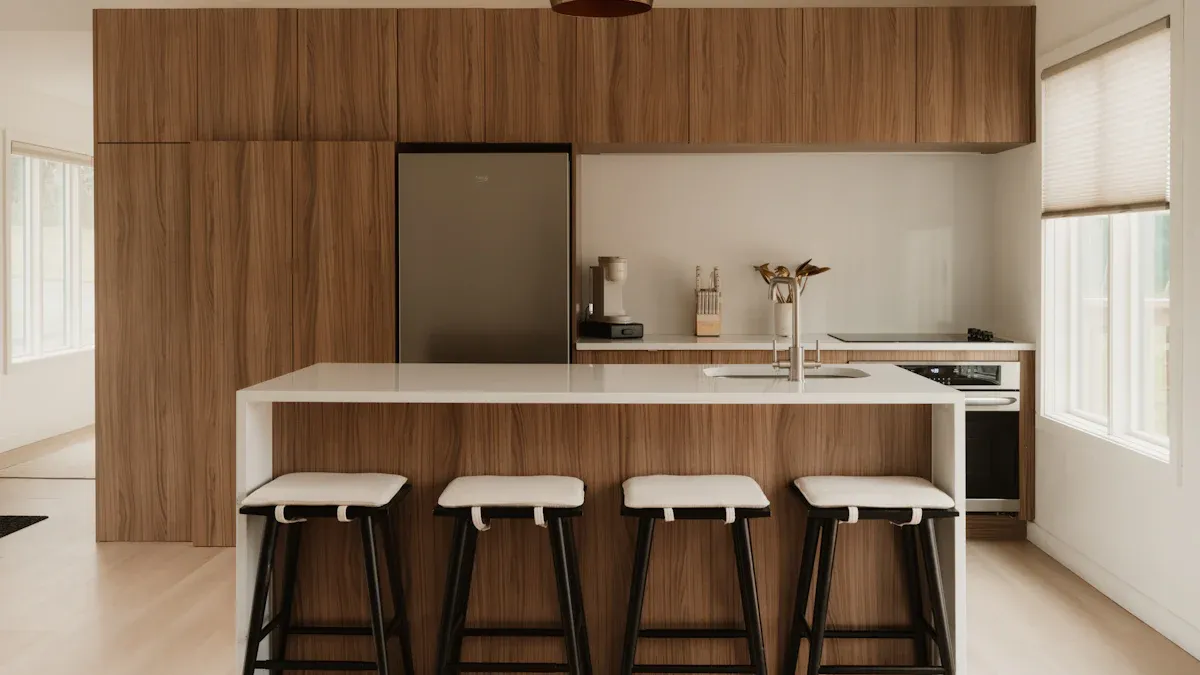
You will find several popular species when you explore types of wood for kitchen cabinets. Maple, oak, cherry, walnut, hickory, birch, and rubberwood dominate the market. Among these, red oak, maple, cherry, and walnut remain the gold standard for quality and performance. Each species brings unique strengths to your kitchen.
The Janka hardness test measures how well a wood resists dents and wear. This rating helps you compare durability across species.
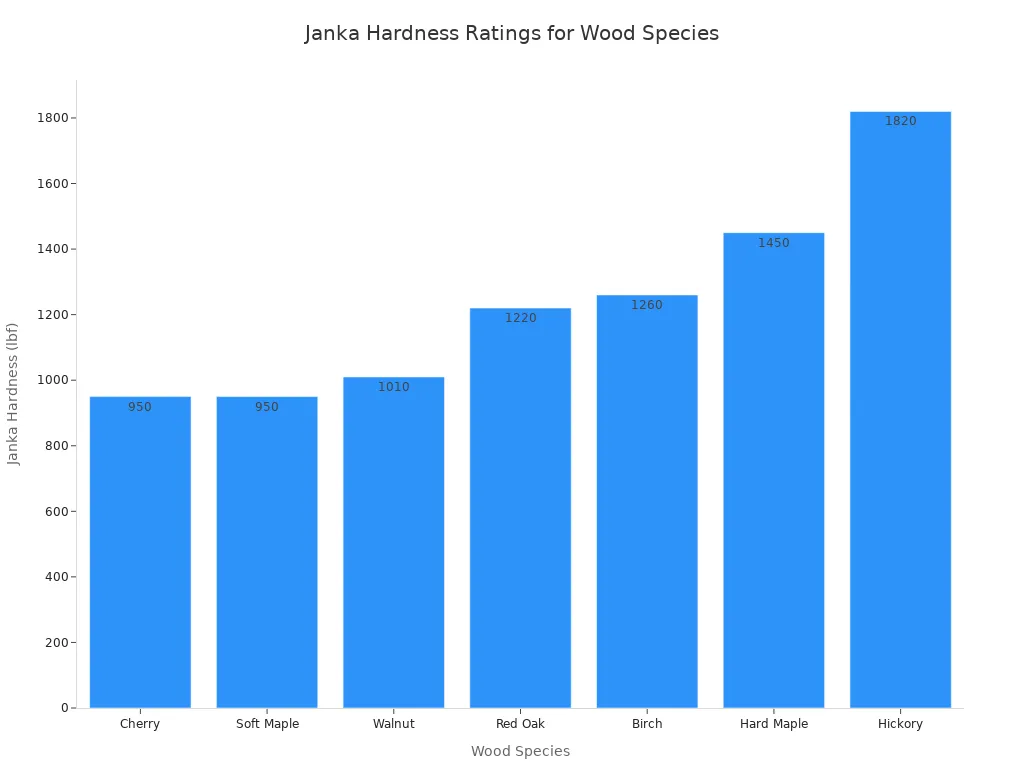
Hickory leads with a Janka rating of 1820 lbf. Hard maple follows at 1450 lbf. Red oak scores 1220 lbf. Cherry and soft maple both rate 950 lbf. Walnut sits at 1010 lbf. Birch reaches 1260 lbf. These numbers guide your choice for busy kitchens.
Maple and Oak: Reliable Classics
Maple offers a fine, even grain with understated elegance. This hardwood resists warping, cracking, and dents. You can paint maple cabinets easily for a clean, modern look. However, dark stains may appear blotchy on maple surfaces. The color also deepens over time with heat and UV exposure.
Oak delivers a distinctive, earthy grain that suits traditional styles. Red oak shows a warm reddish tone, while white oak has a cooler cast. White oak contains natural resins that resist humidity changes effectively. Oak cabinets handle scratches and dents well. Keep in mind that oak is heavy, which can complicate installation. Its porous surface may also stain unevenly.
| Feature | Maple Cabinets | Oak Cabinets |
|---|---|---|
| Appearance | Light-toned, uniform grain; excellent for painting | Distinctive grain; red oak for rustic, white oak for finer texture |
| Durability | High resistance to dents and scratches | Strong impact resistance; white oak resists humidity |
| Cost | More affordable than oak | More expensive; white oak carries a high wholesale cost |
Cherry and Walnut: Premium Choices
Cherry and walnut represent the premium tier for kitchen cabinets. Cherry features a smooth grain and rich reddish-brown tones. This wood darkens beautifully with age and sunlight. Its Janka rating of 950 lbf means you should handle it with care in high-traffic areas. Cherry suits formal, traditional kitchens perfectly.
Walnut offers deep chocolate hues and a straight, elegant grain. With a Janka rating of 1010 lbf, walnut provides solid durability for most households. This species resists moisture well and takes finishes beautifully. You will pay more for walnut, but the result is a stunning, heirloom-quality kitchen.
HenLeap Home provides a wide selection of these species. The brand ensures quality and durability in every cabinet. You can explore maple, oak, cherry, walnut, and more to find your ideal match.
Best Wood for Kitchen Cabinets by Budget
Budget shapes every decision you make about kitchen cabinets. You can find excellent options at every price point. Value picks include birch, rubberwood, and oak. Premium options include cherry and walnut. Your wallet and your design goals both matter here.
Value Picks: Birch and Rubberwood
Birch stands out as the least expensive solid wood option for cabinets. It scores 1260 on the Janka hardness test. That rating places it above red oak and close to hard maple. You get real strength without the premium price tag. Birch has a fine, uniform texture. This smooth surface takes paint beautifully. You can also stain birch to resemble maple, walnut, or cherry. However, dark stains may appear blotchy without professional preparation. Birch has a coarse texture that can make dark finishes look uneven. Painted birch also requires maintenance to prevent damage. Expansion and contraction can lead to stress cracks over time. Despite these quirks, birch delivers reliable performance for functional kitchens.
Rubberwood offers another budget-friendly path. This hardwood costs less than birch because of higher yield during production. Rubberwood has moderate hardness. That level suits daily durability needs in most homes. It resists wear well and needs low maintenance. After sealing, rubberwood resists deformation from humidity fluctuations. Birch demands more upkeep by comparison. Rubberwood also provides good environmental performance. You can feel confident choosing it for an eco-conscious kitchen.
Other affordable species deserve mention. Alder scores 590 on the Janka scale. It stains well to mimic cherry but dents more easily. Poplar is very affordable and smooth. It works best for painted cabinets, especially interiors. Pine ranges from 380 to 870 on the Janka scale. It brings rustic charm at a very low cost. Pine is soft and prone to dings and scratches. These woods serve specific roles well.
HenLeap Home offers affordable cabinetry using high-quality materials. The brand makes premium looks accessible to every budget. You do not need to sacrifice quality for price.
Premium Options: Cherry and Walnut
Cherry and walnut represent the top tier for kitchen cabinets. Cherry features rich, warm tones that deepen over time. This wood adds warmth and evolving character to your space. Its smooth grain suits formal, traditional designs. Walnut offers a dark, elegant appearance with a straight grain. This species supports premium, modern kitchen aesthetics. Black walnut sits in a premium pricing tier because of its striking grain patterns and exceptional durability. Both woods take finishes beautifully.
Premium solid wood cabinets can last more than 50 years with proper care. They often outlast multiple kitchen design trends. These cabinets may even become family heirlooms. Manufactured wood products typically need replacement after 15 to 20 years. Solid hardwood cabinetry maintains structural integrity through decades of daily use. Proper joints and construction techniques help cabinets withstand regular kitchen activity. You invest once and enjoy the result for a lifetime.
HenLeap Home provides a wide selection of these premium species. The brand ensures quality and durability in every cabinet. You can explore cherry, walnut, and more to find your ideal match.
Durable Cabinet Wood for Your Kitchen
Durability matters most in busy kitchens. You need a material that resists dents, scratches, and moisture day after day. The right species protects your investment for decades. Hickory and maple lead the pack for toughness. Engineered options like HDF and plywood offer smart alternatives for specific cabinet parts.
Hickory and Maple for Heavy Use
Hickory stands as the hardest common cabinet wood in North America. Its Janka rating of 1820 lbf surpasses every other domestic species. This number means hickory resists dents and scratches better than alternatives. Active homes with kids and pets benefit most from this strength. Hickory also handles heavy foot traffic without showing wear.
Maple follows closely with a Janka rating of 1450 lbf. This hardwood delivers excellent resistance to dents and warping. You can paint maple for a clean, modern look. The wood also accepts stain well when you prepare the surface properly.
Compare these ratings to other species:
- Hickory: 1820 lbf
- Maple: 1450 lbf
- White oak: 1360 lbf
- Red oak: 1220 to 1290 lbf
- Soft maple: 950 lbf
Cherry offers durability at 950 lbf, but this wood is softer than hickory or maple. You should protect cherry surfaces in high-traffic zones. Hickory outperforms oak for heavy-use areas. Its higher Janka rating makes it more resistant to dents and scratches. Hickory suits spaces with heavy foot traffic, pets, or children.
Engineered hardwoods add another layer of protection. Many feature an aluminum oxide finish, one of the hardest coatings available. This treatment substantially improves scratch and dent resistance. Some products achieve a Janka rating of 2500, making them harder than standard hickory.
Engineered Options: HDF and Plywood
Solid wood is not your only path to durable cabinets. Engineered materials offer strength and stability for specific applications. Plywood and HDF each bring distinct advantages to cabinet construction.
Plywood ranks as the superior cabinet wood for structural frameworks. Its cross-grain construction resists warping and cracking, even in humid kitchens. Plywood is also relatively lightweight, which makes installation easier without sacrificing strength. Marine and exterior grades offer superior moisture resistance for challenging environments.
HDF (high-density fiberboard) excels for doors and visible surfaces. Its dense, uniform texture provides a smooth finish ideal for painting or laminating. HDF resists expansion and contraction better than natural wood under fluctuating temperatures and humidity. This stability keeps your doors looking crisp over time.
| Attribute | HDF | Plywood |
|---|---|---|
| Composition | Wood fibers and resin compressed under high pressure | Thin wood veneer layers glued with cross-grain orientation |
| Strength | Dense and strong | Excellent resistance to warping |
| Moisture Resistance | Limited | Superior in marine or exterior grades |
| Best Use | Doors and painted surfaces | Structural framework |
A combined approach works best. Use plywood for the cabinet structure and HDF for doors and visible surfaces. This balance delivers durability and aesthetics together.
HenLeap Home reinforces every cabinet with quality construction. Soft-close doors and drawers prevent slamming and reduce wear. Durable dovetail drawer construction keeps joints tight for years. These features ensure your kitchen cabinets perform beautifully through daily use.
Styling Your Kitchen Cabinets with the Right Wood
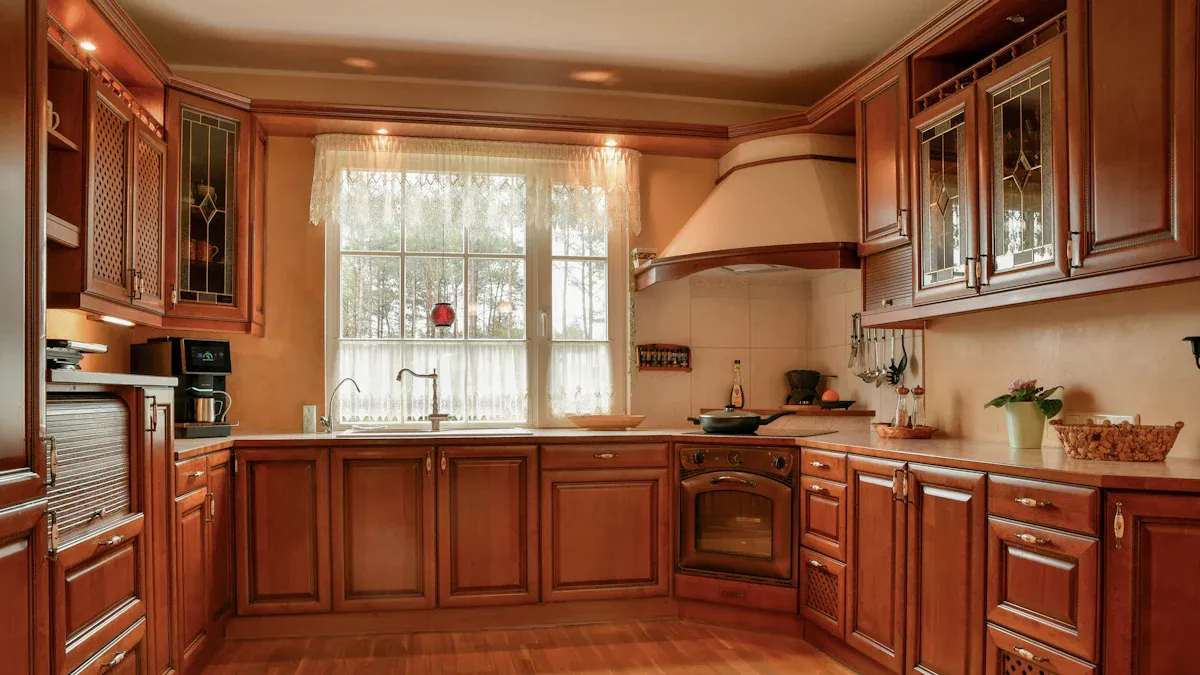
Your wood choice shapes the entire mood of your kitchen. According to the 2026 Houzz U.S. Kitchen Trends Study, wood now ranks as the number one cabinet finish at 29%, surpassing white at 28%. This marks a six-point gain for wood year over year. The NKBA 2026 Kitchen Trends Report found that 59% of design professionals say wood grain is overtaking painted cabinetry. You are part of a clear shift toward natural materials and warm minimalism.
Light Finishes: White Oak and Maple
White oak leads the 2026 market as the most requested species, chosen by 51% of design professionals in the NKBA report. Its golden-tan tones and tight, straight grain suit Scandinavian, modern organic, and high-end transitional kitchens. Light oak veneer works beautifully across full kitchen runs, tall cabinets, and islands. You can also explore popular stain options like Frost, Pearl, or Summer Haze for a softer look.
Maple offers a fine, uniform grain that takes paint exceptionally well. This wood creates clean, bright surfaces for contemporary spaces. Pair light maple cabinets with warm neutral walls in khaki, mushroom, or greige. These tones define the “new not-white” palette for 2026.
Dark Finishes: Walnut and Cherry
Walnut brings deep chocolate hues and elegant straight grain to formal and traditional kitchens. Flat panel or slab doors let the walnut grain take center stage. Glass-front cabinets and open shelving reduce visual weight and add brightness. You can pair dark walnut with emerald green or deep blue accents for a personal touch.
Cherry develops a rich patina through oxidation and UV exposure. This color shift occurs throughout the wood’s cellular structure and cannot be fully stopped by any finish. The depth and translucency of naturally aged cherry is a function of how the patina develops. Staining kills that quality entirely. Use UV-blocking window films and rotate rugs to promote even darkening.
HenLeap Home offers a range of styles and finishes, from modern light luxury to classic shaker. The brand’s 2D and 3D virtual designs help you visualize your chosen materials before you commit.
No single wood fits every kitchen perfectly. Your choice depends on budget, durability needs, and style.
- Choose maple for all-around value.
- Select oak for classic grain.
- Pick cherry or walnut for luxury.
- Use hickory for busy kitchens.
- Choose engineered options for cost-effectiveness.
Protect your investment with proper care. Clean these surfaces weekly with mild dish soap and warm water. Apply a wood-safe conditioner monthly. Avoid silicone sprays that can dry out their finish. This simple routine extends their life for years. There is no single best wood for kitchen cabinets—only the right one for you. Start your kitchen remodel by exploring the curated collections at HenLeap Home. Expert guidance and premium materials help you find the perfect wood for your 2026 kitchen.
FAQ
Which wood species lasts longest in a busy kitchen?
Hickory lasts longest. Its Janka rating of 1820 lbf beats every other common species. Hard maple follows at 1450 lbf. Both resist dents and scratches well. Choose hickory for homes with kids or pets.
Can you paint any hardwood cabinet?
You can paint maple, birch, and poplar successfully. These species have smooth, uniform grain. Oak shows its open grain through paint. Cherry and walnut look best with clear finishes that display their natural color.
Do engineered materials work as well as solid wood?
Engineered materials perform well in specific roles. Plywood resists warping in humid kitchens. HDF provides smooth surfaces for doors. HenLeap Home combines both for strength and beauty. Solid wood still wins for long-term heirloom value.
How do you keep wood cabinets looking new?
Clean surfaces weekly with mild dish soap and warm water. Apply a wood-safe conditioner monthly. Avoid silicone sprays that dry out the finish. Use UV-blocking window films to slow color changes in cherry and walnut.
What is the best wood for kitchen cabinets on a tight budget?
Birch offers the strongest value. Its Janka rating of 1260 lbf rivals more expensive species. Rubberwood costs even less and resists humidity after sealing. Both deliver dependable performance without premium pricing.