
Two-tone kitchen cabinets are one of the biggest design moves of 2026. Nearly 1 in 4 renovating homeowners now choose contrasting upper and lower cabinets, according to the 2026 U.S. Houzz Kitchen Trends Study. That is why two tone kitchen cabinets work so well: they add contrast, depth, and personality without a full remodel.
The most popular two-toned cabinet color combinations pair a neutral with a bold or natural tone. Think white with wood, black with white, navy with white, gray with white, forest green with natural wood, or charcoal with oak. These two cabinet colors suit any kitchen size and budget.
HenLeap Home offers 2D and 3D virtual designs, on-site measurement, and durable construction. Their team helps you execute two tone kitchen cabinet ideas with confidence.
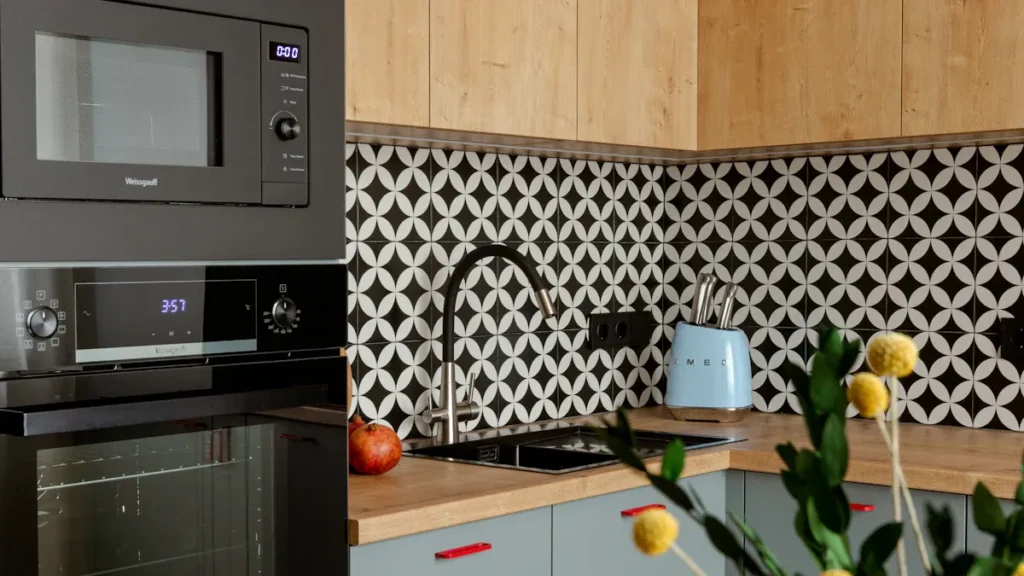
Key Takeaways
- Two-tone cabinets add contrast and personality without a full remodel.
- Popular color pairs include white with wood, black with white, and navy with white.
- Place lighter colors on upper cabinets to make your kitchen feel open.
- Use the 60-30-10 rule to balance your two cabinet colors.
- Test samples in your kitchen lighting before you commit to colors.
White and Wood Two Tone Kitchen Cabinets
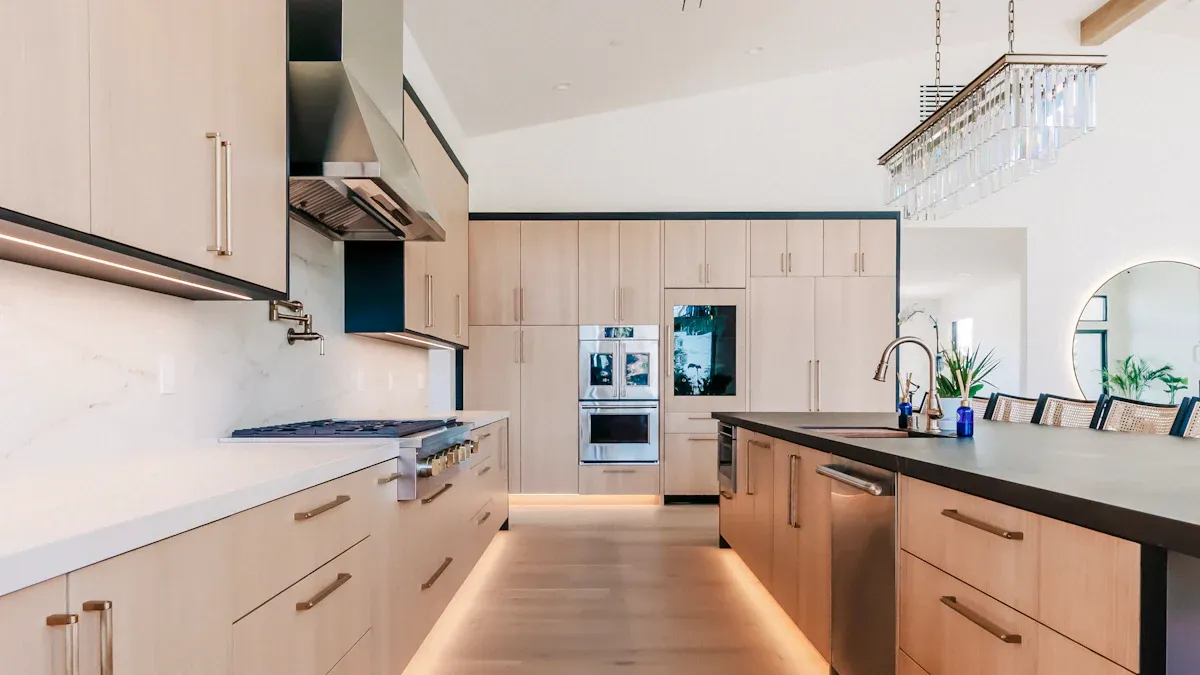
White paired with wood is a foolproof two-tone pairing for 2026. This combination works because white keeps your kitchen bright while wood adds warmth and natural texture that paint finishes cannot replicate. The result feels warm, modern, airy, and timeless. You get a space that looks fresh today and will still feel relevant years from now.
Which Cabinets Go White and Which Go Wood
You have a few reliable placement options for two tone white and wood kitchen cabinets. The most versatile approach puts white uppers above wood lowers. Light uppers reflect natural light and keep the room open. Darker base cabinets ground the space and hide daily wear. This layout works across most kitchen sizes and styles.
Another popular choice keeps your perimeter kitchen cabinets white and makes the island the contrasting focal point with natural wood. This approach suits open-concept layouts especially well. The wood island becomes a focal point without overpowering the room. In compact kitchens, keep upper cabinets light since they dominate your line of sight. A galley kitchen benefits most from light uppers and darker lowers. Skip a contrasting island color in a true galley layout because there is no room for it to read as a focal point.
White cabinetry keeps the kitchen bright, while natural wood adds warmth and visible texture. This pairing works especially well when the wood is used on lower cabinets or the island, creating a softer contrast than two strongly different colors.
Design Styles for White and Wood
Several design styles embrace this two tone kitchen approach. Scandinavian kitchens use light color palettes and natural wood tones such as light oak, birch, and ash. Modern farmhouse pairs Shaker cabinets painted white with reclaimed wood, barn wood accents, and butcher block. Transitional design uses neutral color schemes and mixed finishes so white cabinetry and wood accents coexist in balance. Japandi relies on neutral earth tones and natural materials like raw wood and stone.
For Japandi, choose flat-panel or Shaker-style doors in light wood, white, or grey. Matte black hardware adds subtle contrast. Handleless doors maintain the minimalist feel. These choices support your two tone kitchen cabinets ideas by combining light painted surfaces with warm wood elements.
Black and White Two-Toned Kitchen Cabinet Ideas
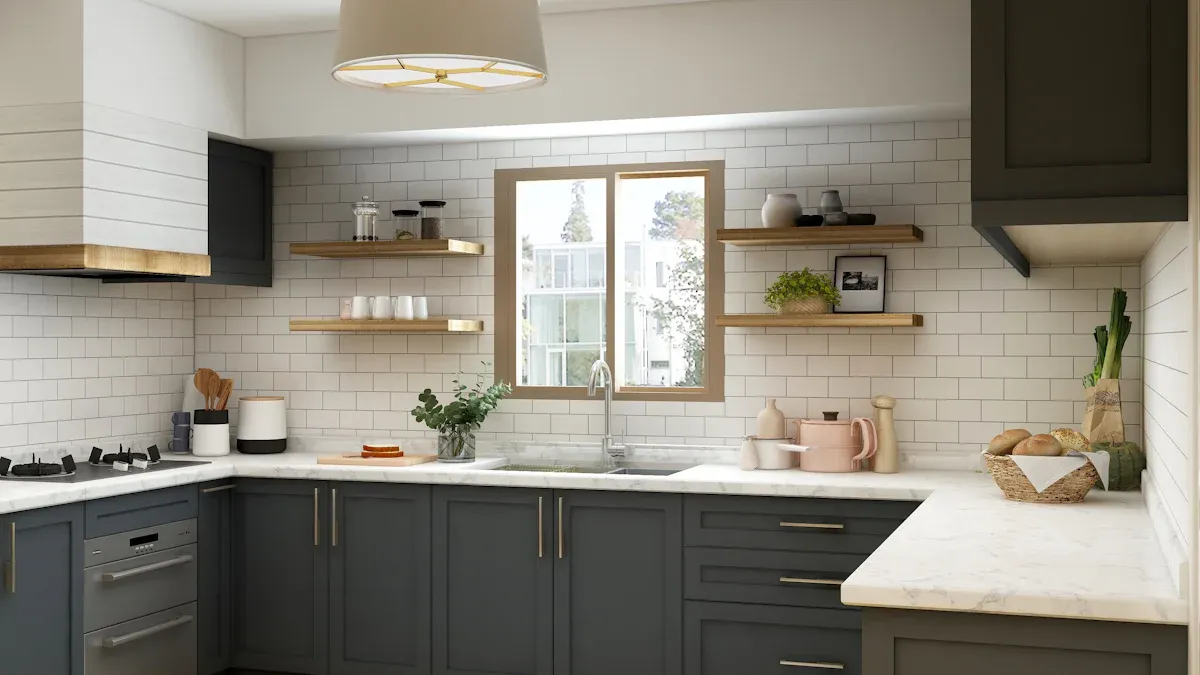
Black paired with wood and black paired with white are both foolproof pairings. The black and white combinationdelivers a bold, graphic, high-contrast look that feels sophisticated. Black symbolizes power and elegance. White symbolizes cleanliness and spaciousness. Together, they create a balanced emotional response—dramatic yet calming, sophisticated yet approachable. That balance helps the look endure instead of feeling dated.
Balancing Black and White Without Overwhelming
The key to two tone black and white kitchen cabinets is proportion. Follow the 60-30-10 rule: 60% dominant color, 30% secondary color, and 10% accents. For two-toned kitchen cabinets in black and white, make white the majority at 60-70% and black the minority at 30-40%. This keeps the design intentional rather than random.
For a balanced two-tone kitchen, use a 60-40 or 70-30 color ratio, and apply darker tones sparingly so the design does not feel visually unbalanced.
Placement matters too. Black base cabinets with white uppers create a grounded foundation. The dark lowers add visual weight and hide everyday wear. White uppers reflect light and keep the space open. You can also try a black island with a white perimeter for a similar effect.
Design Styles That Suit Black and White
Several styles embrace this two tone kitchen approach. Modern kitchens pair black and white cabinets with high-gloss finishes that reflect light. Industrial design uses matte black cabinets for a dramatic, sophisticated vibe. Contemporary interiors benefit from matte finishes that offer a soft feel. Minimalist kitchens also work well when you keep lines clean and hardware simple.
Styling safeguards prevent the look from feeling stark. Brass hardware softens the contrast and adds warm metallic interest. Stainless steel hardware emphasizes a modern, industrial aesthetic. White quartz or marble countertops create seamless integration with white uppers. Subtle veining in Carrara marble or Calacatta quartz adds pattern and movement. These two tone kitchen cabinet ideas help you build a space that feels timeless.
Navy and White Two Tone Kitchen Cabinets Ideas
Navy and white deliver a timeless, coastal, and elegant mood. This pairing feels classic yet fresh, and it suits coastal, traditional, transitional, and modern classic styles. A 2026–2027 kitchen trends feature highlights dark blue lower cabinets with white upper cabinets, complemented by an apron front sink, white subway tile backsplash, and brass sconces, faucet, and hardware. That look defines classic navy + white design.
Where to Place Navy for Maximum Impact
You have two proven placement strategies for white and navy cabinets. Navy lowers with white uppers create visual contrast while keeping the kitchen light and bright. The navy lowers add grounding and sophistication. This layout works well in kitchens with limited natural light, and darker lowers hide wear and dirt. For open-plan kitchens, try a navy island with white perimeter cabinets. The island becomes the focal point without overwhelming the space. This approach delivers a dramatic pop of color. If you want a bolder look, consider two tone blue and gray kitchen cabinets for a softer variation.
Pairing Navy with Countertops and Hardware
Light countertops in quartz or marble brighten the base cabinetry. The contrast makes navy cabinets appear richer and more dramatic. Crisp white walls and trim create high contrast that makes navy cabinetry the focal point. For hardware, brass adds warmth and elegance. Brushed nickel offers a cooler, more contemporary feel. Matte black creates sharp contrast. These two tone kitchen cabinets ideas work across many kitchen cabinet ideas. When planning your two tone kitchen, test samples against your countertop and flooring. A well-executed two-toned kitchen feels intentional and polished. With the right two tone kitchen cabinet ideas, your space transforms beautifully.
Gray and White Two-Tone Kitchen Cabinets Ideas
Gray paired with white is a sleek 2026 trend that keeps gaining momentum. This combination feels soft, versatile, and elegant. Gray works as a flexible neutral that pairs well with contrasting tones. It can serve as a backdrop for vibrant accents or blend harmoniously with other neutrals. White brightens the space and produces a fresh, clean aesthetic. Darker grays add contrast and sophistication. Together, they create a dynamic look that retains gray’s versatility.
Choosing the Right Gray Tone
Your gray choice shapes the entire mood of your two tone kitchen cabinets gray and white. Charcoal gray delivers a classic, timeless look. White uppers or a white base contrast beautifully with charcoal lower cabinets. White keeps the kitchen bright while charcoal adds depth. This pairing suits marble or butcher block countertops. Blue-gray offers a cooler, calmer feel. It is softer than navy and works well for coastal-inspired or calming kitchen designs.
| Gray Shade | Pairing with White Cabinets | Key Characteristics | Best For |
|---|---|---|---|
| Charcoal Gray | White uppers/base contrast with charcoal lower cabinets | Classic, versatile, timeless; white keeps the kitchen bright while charcoal adds contrast and depth | Marble or butcher block countertops; balanced, enduring two-tone look |
| Blue-Gray | Blue-gray base paired with crisp white uppers | Cool, calming, softer than navy | Coastal-inspired or calming kitchen designs |
Design Styles for Gray and White
White or off-white upper cabinets paired with gray or charcoal lower cabinets create the most classic modern two-tone look. This combination offers contrast without committing to a single color. It suits contemporary, transitional, and Scandinavian-influenced kitchens. Charcoal lowers offer practical durability in high-use kitchens. You can finish the look with brushed nickel or chrome for a clean feel, or matte black for a more graphic edge.
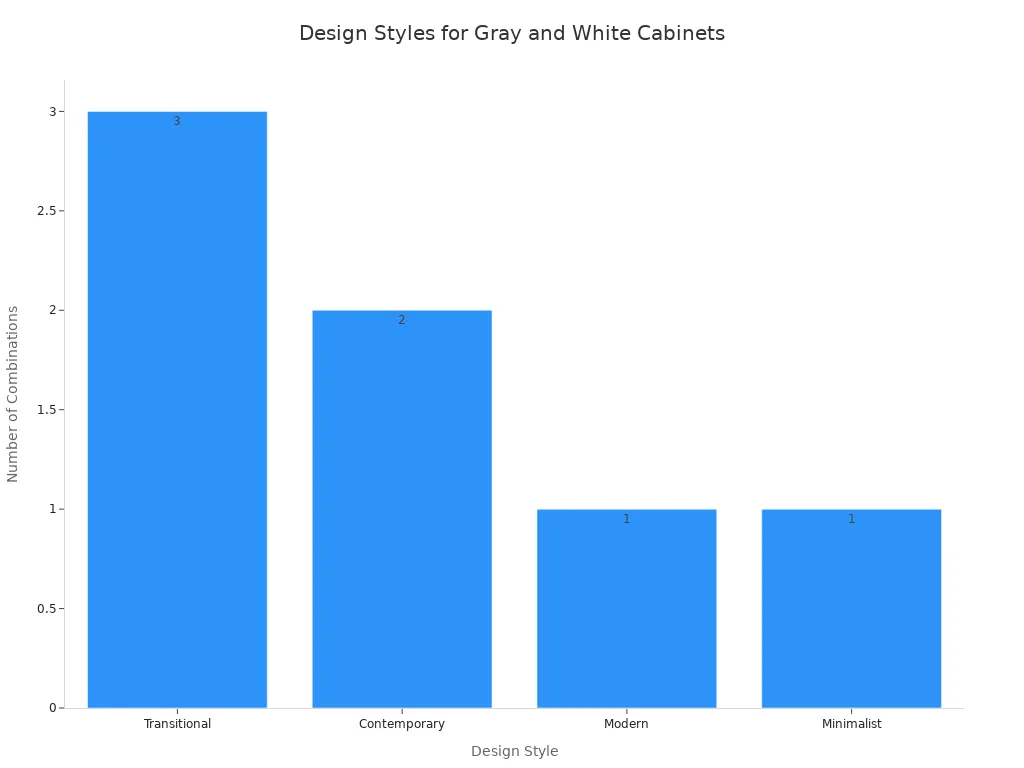
For placement, try a gray island with a white perimeter. This makes the island a focal point without overwhelming the space. You can also use gray lowers with white uppers. This grounds the kitchen while keeping it light. Warm wood tones with light gray uppers add extra depth. These two tone kitchen cabinet ideas help you build a space that feels both fresh and enduring.
Green and Cream Kitchen Cabinets
Green and cream is the earthy pairing that defines 2026. Forest green with natural wood and bold black and green combinations are leading the trend. This mix feels fresh, earthy, and inviting. It suits modern farmhouse, cottage, transitional, and eclectic styles. You get a space that feels grounded yet lively.
Best Green Shades with Cream
Smoky jade, sage, and olive are the consensus “it” family for green cabinetry this year. A deeper forest-toned sage on a slim shaker door reads especially current. Stark white is out. Creamy warm whites pair beautifully with wood, brass, and stone. Choose a soft white like Galaxy Dove over a blue-cool bright white.
| Green Shade | Character | Best Cream Pairing |
|---|---|---|
| Smoky jade | Muted, sophisticated | Warm cream with yellow undertones |
| Sage | Soft, herbal | Galaxy Dove or similar soft white |
| Olive | Earthy, grounded | Cream with subtle green undertones |
Matte finishes are now the default for these two tone kitchen cabinets green and white. A matte finish diffuses light softly and helps colors appear more nuanced and rich. Unlacquered brass warms up cool greens. Matte black creates sharp contrast against creamy neutrals. For placement, try green lowers with cream uppers. This keeps the room airy at eye level while grounding the base. A sage island under cream uppers reads current without shouting. You can also mix materials by pairing painted cabinets with natural wood drawers or shelves for texture variation.
Matching Green and Cream with Flooring
Your flooring choice makes or breaks this two tone kitchen. Warm floors in honey, gold, or orange tones pair best with cream, warm white, taupe, olive, and muted green. Light oak, maple, and birch create an open, relaxed feel. These floors help prevent dark cabinets from feeling heavy.
Cool floors in gray, blue, or charcoal suit crisp white, deep blue, black, and soft gray. Icy gray and blue-white are difficult with golden oak because they intensify the floor’s yellow undertones. Neutral floors like beige, greige, or natural oak stay flexible with both painted and stained cabinetry.
Tile flooring adds grout lines and texture. Patterned tile works best with simple doors and quieter cabinet colors. Pull a secondary shade from the tile rather than matching the dominant color. Hardware can reinforce your palette. Brushed brass complements warm flooring and cream cabinetry. Matte black or brushed nickel suits cooler combinations. Always view samples under different lighting conditions before committing. These two tone kitchen cabinet ideas help you build a space that feels intentional and warm.
Charcoal and Oak Two Tone Kitchen Cabinets
Charcoal and oak deliver a dramatic, warm, and natural mood. According to Next Day Cabinets, pairing charcoal gray cabinets with natural oak produces a sophisticated contrast suited to contemporary kitchens that still want organic warmth. The deep charcoal tone acts as a dramatic backdrop. It gives the oak grain visual prominence and offers more interest than pure black. Natural oak supplies warmth and texture. It keeps the room from feeling stark or industrial. Its prominent grain adds character and variation. Together, these tones bridge sleek contemporary styling with natural, organic elements. That is exactly how this two-tone scheme achieves a dramatic but warm natural kitchen design.
Balancing Charcoal with Warm Oak
You can keep a charcoal and oak two tone kitchen from feeling too dark with a few smart moves:
- Place the darker color on the lower kitchen cabinets and the lighter color on the upper cabinets. This grounds the space, draws the eye upward, and makes the room feel more open.
- In smaller or dimly lit kitchens, use a softer contrast between the two cabinet colors. Bolder contrast works better in bright, airy kitchens.
- Introduce warm wood tones, such as light oak open shelving, against dark charcoal cabinets. This adds warmth and texture without overwhelming the palette.
- Use matte black hardware to create a unifying line across both light and dark cabinets. Warm brass hardware adds elegance and ties the warm and cool tones together.
- Establish a clear focal point, like a contrasting island, so the two-tone scheme feels intentional rather than disjointed.
A Scandinavian Warmth scheme pairs charcoal cabinets with light oak or blonde wood open shelving, light concrete or pale quartz countertops, and minimal brushed nickel hardware. The natural wood shelving introduces warmth without overwhelming the palette. The pale countertops keep the space airy. The brushed nickel hardware stays quiet, letting the material contrast do the visual work.
A Sophisticated Neutral scheme combines charcoal cabinets with warm off-white or greige walls, marble or light stone countertops, and brushed brass fixtures. Charcoal has cool undertones that can read cold in the wrong context. The warm greige walls and brushed brass fixtures immediately shift the palette toward polished and livable. This is a strong choice for open-plan spaces where the kitchen flows into a warmer living or dining area.
Design Styles for Charcoal and Oak
Modern rustic, industrial, and contemporary styles all suit this pairing. For placement, try charcoal uppers with oak lowers. This flips the usual dark-on-bottom approach and creates a striking, furniture-like look. You can also use an oak island with charcoal perimeter cabinets. The oak island becomes a warm focal point against the darker surround. These two tone kitchen cabinet ideas help you build a space that feels both dramatic and grounded.
Island Contrast Pairings with HenLeap Home
Island contrast is one of the most popular two-tone approaches, and for good reason. Painting the island a different color makes it the star of the show. It introduces a bold accent without overwhelming the whole room. Crisp white perimeter kitchen cabinets paired with a rich navy or warm wood-tone island instantly create a focal point. This approach shines in open-concept layouts, where the island anchors the kitchen and living areas together. You get a deliberate, contained focal point instead of a visual boundary running the length of the room. It is also a lower-commitment version of two tone cabinets with island contrast, since you do not need the entire kitchen to carry the look.
Choosing an Island Color That Complements
Start with your perimeter color, then pick an island tone that flatters it. White perimeter cabinets pair beautifully with a forest green island. Cream perimeters suit navy. Light gray perimeters work with charcoal, and natural wood perimeters pair well with black. A wood-stained island adds warmth and texture against any painted perimeter. Watch your undertones, too. Cool gray perimeter cabinets should meet cool whites, while warm wood tones pair best with warm creams. That keeps your two tone kitchen cabinets feeling intentional rather than clashing.
Using HenLeap Home Hardware to Tie the Tones
HenLeap Home builds cabinetry with soft-close doors and drawers, reinforced cabinet construction, and durable dovetail drawer construction. Those details matter on a heavily used island. The brand also offers shaker, frameless, and slab door styles, so your two tone kitchen cabinet ideas can follow any design direction. Hardware finishes bridge the two tones. Brass is never wrong on anything darker than about LRV 40, and matte black is never wrong on anything lighter than about LRV 30. Matte black has no undertone, so it suits both warm and cool doors. In a black-and-white two tone kitchen, black hardware ties white doors to a black island. Brushed brass warms up navy, green, and oak. Test a sample handle against your cabinets in your actual lighting before you commit. With the right pairing, your two tone kitchen transforms beautifully.
How to Choose Your Two Tone Pairing
Kitchen Size, Layout, and Natural Light
Your kitchen’s size and layout dictate which cabinets should go dark and which should go light. In small or dim kitchens, lighter upper cabinets paired with darker lower cabinets draw the eye upward and create a sense of height and openness. Softly contrasting, related shades add visual interest without feeling cramped. Large or bright kitchens give you room to experiment with bolder, darker colors for a more dramatic palette.
| Kitchen Situation | Cabinet Color Placement | Expected Effect |
|---|---|---|
| Small or dim kitchen | Lighter uppers, darker lowers | Draws the eye upward, creating height and openness |
| Small or tight space | Softly contrasting, related shades | Adds visual interest without feeling busy |
| Large or bright kitchen | Bolder, darker colors are acceptable | Supports a more dramatic palette |
Natural light shapes your color choices too. Designer Stephanie Dyer, cited by This Old House, recommends placing the darker, more saturated color on base cabinets with lighter shades above. This grounds the room and makes a small kitchen with a low ceiling appear larger. Sherwin-Williams publishes a Light Reflectance Value (LRV) for every color on a 0–100 scale. Your two-tone scheme needs an obvious LRV gap between the two colors. Otherwise, the kitchen looks like one color that failed to cover rather than two intentional colors. In north-facing rooms, lean toward higher-LRV colors. Keep uppers high-LRV and let base cabinets carry the depth.
Coordinating Countertops, Flooring, and Hardware
Your countertops, flooring, and hardware tie your two tone kitchen together. White uppers with a black or navy island pair well with white or light-grey quartz, dark-stained oak flooring, and brushed gold or matte black hardware. White uppers with blue lowers suit matte quartz with subtle veining, light maple flooring, and brass or matte black hardware. Grey matte cabinets with a contrasting island work beautifully with butcher block, natural oak flooring, and matte black hardware.
| Two-tone cabinet scheme | Countertop | Flooring | Hardware |
|---|---|---|---|
| White uppers + black/navy island | White or light-grey quartz | Dark-stained oak | Brushed gold or matte black |
| White uppers + blue lowers | Matte quartz or light grey granite | Light maple | Brass or matte black |
| Grey matte cabinets + contrasting island | Butcher block | Natural oak | Matte black |
HenLeap Home offers 2D and 3D virtual design service and on-site measurement to help you visualize your pairing before you commit. They serve both B2B and B2C customers with affordable, high-quality cabinetry. These two tone kitchen cabinet ideas make your kitchen cabinet ideas feel intentional and polished.
Two tone kitchen cabinets work in small galley kitchens, large open-concept spaces, and everything in between. In a narrow galley, crisp white uppers paired with warm natural wood lowers reflect light and add depth. Your best pairing depends on your natural light, existing finishes, and personal style, not just trends.
Start with one of these ten two tone kitchen cabinet ideas. Test samples in your space. Then let HenLeap Home handle the rest with quality cabinetry and hardware. Your two tone kitchen transformation is closer than you think. Pick your colors, order samples, and make it happen.
FAQ
Do two tone kitchen cabinets work in a small kitchen?
Yes, they work beautifully in small kitchens. Use lighter colors on your upper cabinets and darker tones below. This draws your eye upward and makes the space feel taller. Softly contrasting shades add interest without making the room feel cramped.
How do I pick the right colors for my two tone kitchen?
Start with your fixed elements like flooring and countertops. Choose a neutral for the dominant color and a bolder tone for the accent. Test samples in your actual lighting before you commit. This approach keeps your two tone kitchen cabinet ideas grounded and cohesive.
Can I mix cabinet door styles in a two-tone kitchen?
You can, but keep it simple. Stick with one door style across both colors for a cohesive look. If you want variety, try a different style on the island only. HenLeap Home offers shaker, frameless, and slab options for your kitchen cabinets.
What hardware works best with two-tone kitchen cabinets?
Hardware should bridge your two colors. Matte black works on almost any door color because it has no undertone. Brass adds warmth to navy, green, and wood tones. Brushed nickel suits cooler palettes. Test a sample handle against both cabinet colors before buying.
How much does a two-tone kitchen cost compared to a single-color design?
Two-tone cabinets typically cost the same as single-color cabinets. You pay for the cabinetry, not the number of paint colors. The main variable is door style and material quality. HenLeap Home offers affordable options for both B2B and B2C customers.