
Green kitchen cabinets are the signature color of 2026. This shade balances timeless warmth with modern style, and that is why it tops so many design trends right now.
You may wonder if green works in your home. It does. Green kitchen cabinets fit almost any style. The right finish, hardware, and countertop make them practical too.
Picture your kitchen without plain white boxes. Now imagine soft green kitchen ideas that feel calm and grounded. That shift changes the whole mood of the room.
A green kitchen is not loud. It feels personal, warm, and polished. One bold choice can define your entire kitchen design.
Key Takeaways
- Green cabinets fit any kitchen style. They bring calm and warmth to a room. Match the finish to your natural light.
- Test sample doors in your kitchen light. Watch the color shift from morning to evening. Choose a shade for your space.
- Pair warm greens with brass hardware. Pair cool greens with black or chrome. Test pulls with your cabinets first.
- Two-tone schemes keep kitchens bright. Use green lowers with white uppers. This adds color without overwhelming the room.
- Use virtual design tools to preview your kitchen. This removes guesswork from your choices. It helps you avoid costly mistakes.
Deep Green Cabinet Ideas
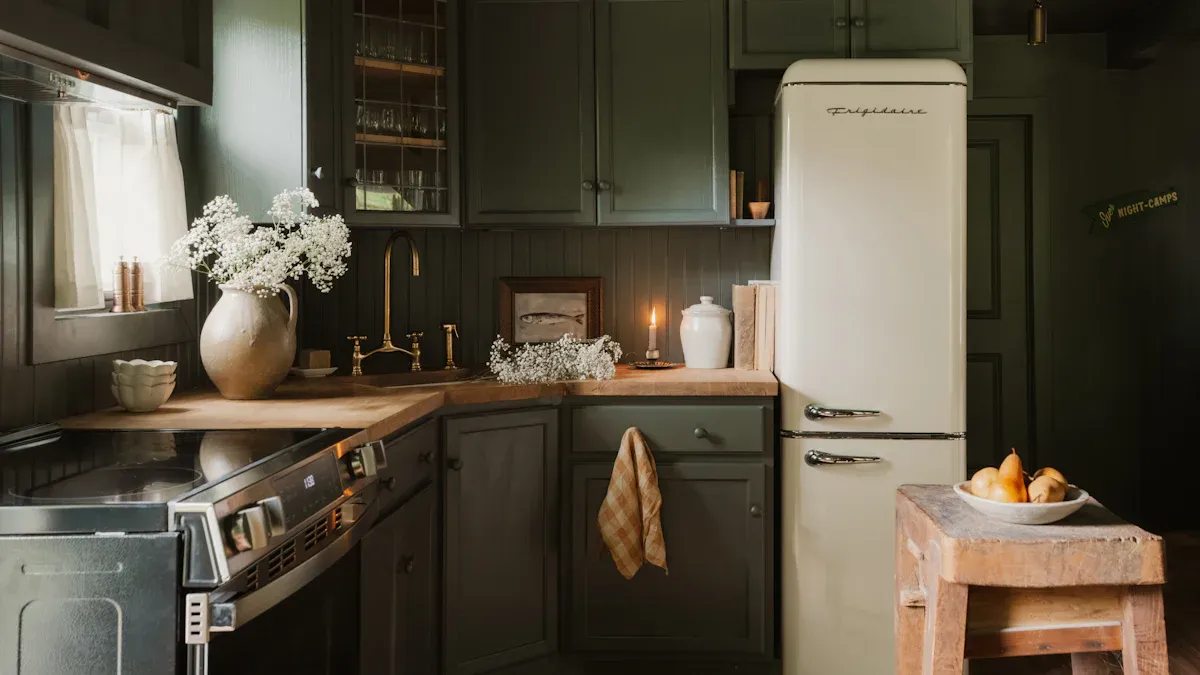
Deep greens anchor a room in a way few colors can. Designers are betting on smoky jade, deep forest, and Nori, a saturated forest-green lacquer, for 2026. These shades give a kitchen real presence. Nori arrives as a hand-applied lacquer on a minimalist door style, adding a light-catching richness that flat paint can’t match. It works well for an island or a pantry zone. “Darker greens make cabinets feel like furniture rather than just storage,” one designer explains. “The depth asks you to notice the wood, the joinery, the craft.” That mindset changes how you live with the room every day.
Forest Green for Bold Kitchen Character
Forest green cabinetry delivers instant character. Choose matte finishes to soften the deep tone, then pair them with light countertops such as white marble or pale stone for crisp contrast. Unlacquered brass or gold hardware warms the look and develops a soft patina over time. Matte black handles offer a sharper, modern edge instead. Both directions keep the room from feeling heavy.
Lighting earns extra attention with this bold shade. Dark finishes absorb light rather than reflecting it, so a kitchen with too few fixtures can feel smaller and heavier. The direction of your windows matters too. A bright, south-facing space makes forest green look vibrant, while a north-facing room turns the same tone muted and moody. Test your sample at different times of day before you commit. Then layer your lighting: ambient ceiling lights build the base, under-cabinet task lights keep work surfaces visible and banish shadowy voids, and warm pendants make the color feel inviting. Light oak shelving and warm wood flooring add texture so the finish never looks flat.
Your green kitchen cabinets also need the right companions. Charcoal or light gray stone countertops anchor the space without competing. Black countertops blend traditional and contemporary styles in a single stroke. Add tiled splashbacks or fluted glass for texture, and keep the counters light to preserve the room’s openness. This green cabinetry works best when the materials around it carry some warmth.
Hunter Green for Furniture-Style Cabinets
Hunter green leans into craftsmanship. This shade makes cabinetry look like built-in furniture, with a depth that white paint never achieves. The effect suits a slim shaker profile or a flat modern panel, depending on whether you want tradition or minimalism. Pair hunter green with aged bronze hardware for old-world character. Polished nickel or chrome reads crisp and contemporary instead.
Emerald cabinetry follows the same furniture-first logic. Its vibrant tone pairs well with matte black range hoods and accents, creating a clean silhouette. Keep countertops light either way. White quartz with subtle veining offers contrast without overpowering the color. Smooth black stone works too when you want a dramatic, finished look. Warm lighting brings out the depth and keeps the room cozy.
Practical details make the bold finish feel refined. Good construction and smooth-operating hardware take the anxiety out of a dramatic color. A green kitchen should feel personal, and the right hardware, lighting, and construction make it feel polished from morning to night.
Earthy Green Kitchen Designs
Earthy tones connect your kitchen to nature, and that connection drives green kitchen designs in 2026. Olive and moss sit at the center of this shift. Both shades feel calm, organic, and welcoming. They also tie directly to the sustainability trend. Homeowners now want a green kitchen that reflects their values, not just their taste.
Olive Green with Black Metal and Warm Wood
Olive green cabinets bring a grounded, natural feel to any space. Pair them with matte black hardware for a clean, modern contrast. Black handles and knobs create a striking look that keeps the room sharp. Warm wood accentsbalance that edge. Use oak, walnut, or teak on flooring, open shelving, or a butcher block island. The warmth of the wood softens the green and makes the room feel organic.
Countertops matter just as much. Cream quartzite works especially well with olive cabinetry. Slabs with taupe or gold movement bring a warm, organic feel. Natural wood accents and brass hardware pair beautifully with the green. Butcher block adds warmth without making the space feel heavy.
Behr MOUNTAIN OLIVE is presented as an earthy green palette choice for evocative kitchens, with green linked to hope, optimism, new growth, renewal, harmony, and balance.
Moss Green on Lower Cabinets and Islands
Moss green offers a restrained way to add color. Use it on lower cabinets or an island to bring depth without overwhelming the room. This approach keeps your kitchen bright and open while still feeling grounded. The shade pairs beautifully with wood, stone, and metal, so you can refresh the space over time without replacing large components.
Sustainability gives moss its staying power. Choosing durable, natural materials extends the life of your cabinetry and reduces waste.
| Sustainability factor | How it supports moss green cabinetry |
|---|---|
| Material selection | Natural materials help lower demand for new raw materials |
| Finishes | Thoughtfully chosen finishes help keep indoor air cleaner |
| Longevity | Durable cabinetry extends useful life and reduces waste |
Sage Green Kitchen Serenity
Sage green cabinets bring calm to a busy home. Green is a top kitchen color for 2026, and muted sage stands out among the trending earthy tones. People treat this shade as a long-term neutral, not a passing fad. Matte finishes lead the trend because they soften light and reinforce the earthy, calm quality of the color. Shaker doors give sage cabinetry a timeless, craftsman feel. Slab-front doors push it toward minimalism, while beadboard or raised-panel doors add cottage charm.
Soft Sage Cabinets with White Countertops
Soft sage cabinetry paired with white countertops creates one of the most serene combinations in a green kitchen. White marble amplifies natural light, especially with white backsplash tile. White quartz is the safest, most versatile pairing. Its clean surface gives your eye a visual break from the cabinet color. Quartz is a practical choice for a kitchen with a bold cabinet choice. Add a textured tile backsplash for visual interest.
Full sage perimeter cabinets with light countertops feel expansive in well-lit rooms. In smaller or darker kitchens, lighter sage tones and reflective counters keep the space balanced. A sage island with neutral perimeter cabinets is one of the most popular lower-commitment configurations. It makes the color feel intentional rather than bold. For a calm, enveloping effect, color drenching with a muted, gray-leaning sage on cabinets, walls, and ceiling can make a kitchen feel larger and more serene.
Dusty Green with Brass and Open Shelving
Dusty green cabinets with brass hardware feel cozy and refined. Choose shaker-style doors, then finish them with brass or unlacquered brass hardware. That pairing makes the kitchen look intentionally designed instead of accidental. Open shelving completes the look. Wooden shelves add warmth and let you display decorative dishware and seasonal decor. Style the shelves with green ceramics for low-cost, high-impact storage. Vintage-style green glassware catches the light and reinforces the green cabinetry with brass details.
A sage green backsplash ties the whole scheme together. Display your favorite pieces on the open shelves so they personalize the space. This approach works in any size kitchen, and it lets you enjoy green cabinetry without committing every surface to color.
Retro Green Kitchens with Pistachio and Mint
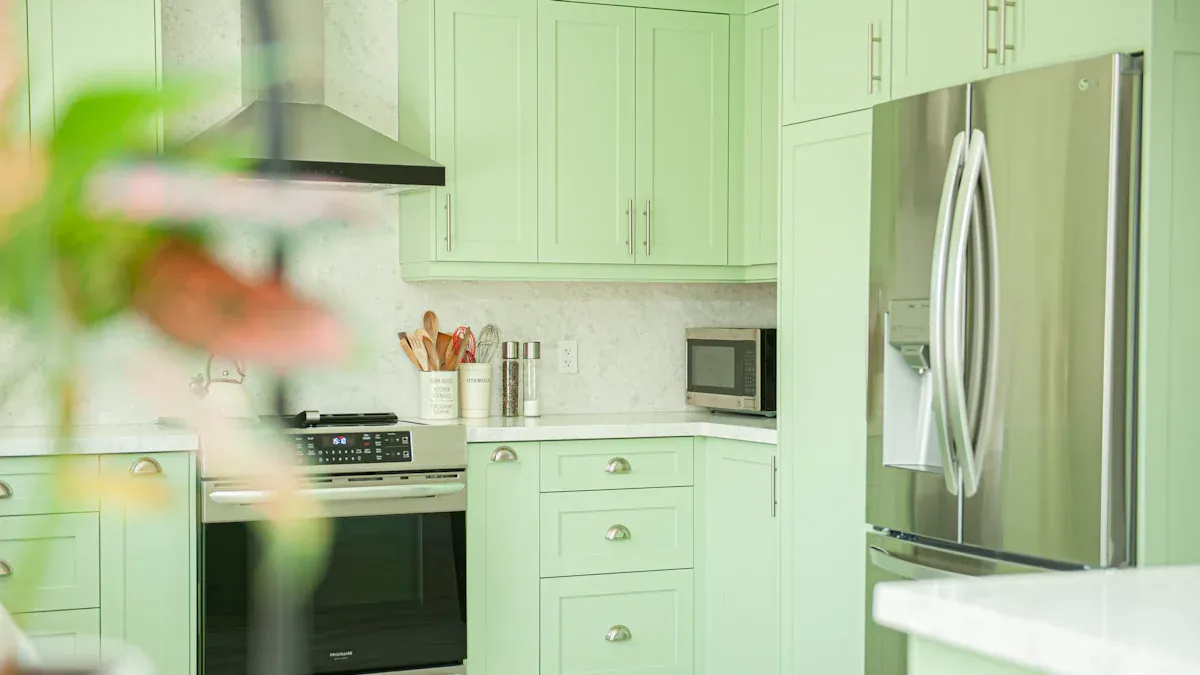
Retro shades bring playfulness back to the heart of your home. Pistachio and mint feel lighter than forest or olive, yet they still carry that unmistakable green character. These tones work beautifully in green kitchens that celebrate mid-century charm and vintage personality.
Pistachio Green in Mid-Century Modern Designs
Pistachio green cabinetry captures the optimistic spirit of mid-century modern kitchen design. This soft, yellow-leaning green pairs naturally with walnut wood tones, tapered legs, and clean geometric lines. You get a space that feels nostalgic without looking dated.
Start with flat-panel or slab-front doors to honor the era’s minimalist aesthetic. Add brass or matte black pulls with simple shapes. Butcher block or white quartz keeps the palette balanced. A pistachio island against neutral perimeter cabinets creates a striking focal point without overwhelming the room.
Lighting completes the retro look. Choose globe pendants in brass or chrome. These details make your green kitchen feel intentional and collected over time.
Mint Green with Vintage Tile and Chrome
Mint green cabinetry offers a fresh, airy alternative to deeper shades. This pale green works especially well with vintage-inspired elements. You can build a cohesive retro look with the right supporting materials.
| Design element | Recommendation | How it supports the look |
|---|---|---|
| Hardware finish | Polished chrome or nickel | Provides the clean, classic metallic look that complements mint green |
| Tile style | Tiled splashbacks | Fits vintage-inspired or eclectic kitchens |
| Wall/backsplash texture | Fluted glass | Adds depth without competing with the green cabinetry |
Polished chrome hardware gives mint cabinets a crisp, classic feel. Tiled splashbacks reinforce the vintage mood. Fluted glass adds visual interest without fighting the soft green tone.
This combination suits green kitchens in bungalows, cottages, and urban apartments alike. The pale green keeps the kitchen bright, while chrome and tile add character. You get a space that feels cheerful and timeless.
Two-Tone Green Kitchen Cabinets
Two-tone schemes help you ease into green cabinetry without covering every surface with color. The approach keeps the room open and bright, a natural fit for a small kitchen. Designers now lean toward tonal pairings within one color family rather than stark contrasts. Earthy tones like smoky jade, sage, and olive stay muted enough to look current for years, yet strong enough to carry the whole space.
Green Lower Cabinets with White Uppers
This classic pairing combines visual interest with practicality. A sage finish on the lower half hides scuffs and stains, while white or ivory uppers reflect light and lift the ceiling line. In a small apartment, going lighter on top keeps the room feeling airy and inviting. Try a grounded shade like Behr MOUNTAIN OLIVE on the lowers, then brighten the uppers with warm ivory. Warm brass hardware ties the two halves together, and neutral appliances blend right into the look.
The formula adapts to almost any style. Shaker cabinets give you that timeless, craftsman feel, while modern slab fronts push the same palette toward minimalism. Switch countertops to change the mood. Butcher block adds earthy warmth, and white marble keeps the contrast crisp. Deeper green paint options, or lighter sage choices, work well within this structure.
Layered Green Islands with Contrasting Base Cabinets
A colored island against a neutral base offers a lower-commitment route into the trend. Wood-toned lowers or islands are a popular contrast choice, leading ahead of blue and green. You can see why: a sage island under cream uppers reads current without shouting. For a bolder move, pair darker lowers with soft sage uppers to build tonal layers across the room.
This setup keeps your green kitchen grounded but bright. The island becomes the focal point where people gather, while the perimeter stays calm. Shaker and modern cabinet styles flex easily into either role. Add open wood shelving or a butcher block top to connect the island to the room.
How to Choose and Accessorize Green Cabinets
Matching Green Undertones to Natural Light
Green cabinetry comes in warm, cool, and muted families. Warm greens lean olive or yellow-based. Cool greens carry blue undertones. Gray-based greens feel soft and subdued. Your kitchen’s natural light decides how each one reads on the wall.
South-facing kitchens amplify warmth. A deep green here looks vibrant and saturated. The same shade in a north-facing room turns muted and moody. Warm artificial light enhances earthy undertones, while cool light brings out the crispness of mint.
| Green Paint Color | Undertone Type | North-Facing Kitchen Behavior | South-Facing Kitchen Behavior |
|---|---|---|---|
| Deep forest green | Cool green with blue undertones | Looks muted or moody; creates a dark, cozy look without feeling icy | Looks vibrant and saturated |
| Olive green | Warm muted green with yellow undertones | Looks slightly more greyish while retaining warmth | Leans into yellow undertones more, subtly enhancing warmth |
| Mint green | Cool green with blue undertones | Muted and cool | Crisp and bright |
Order a few sample cabinet doors first. Place them in different spots around your kitchen. Watch how the color shifts from morning to evening. Test paint swatches on the wall next to a sample door throughout the day. This confirms the undertones work together.
Kitchen size matters too. Lighter greens like mint or pale sage suit smaller kitchens. Deeper greens like emerald, forest, or olive work well in larger kitchens.
Hardware should match the green’s undertones. Warm greens like olive and sage pair with gold or brushed brass hardware. Cool greens like emerald and teal pair with chrome, nickel, or matte black. Order sample pulls and test them against your cabinet doors in daylight and evening light. Hold each piece to check comfort and weight. For shaker doors, try brass or matte black. Flat-panel doors suit matte black or brass pulls. Raised-panel doors work with bronze.
Countertops and backsplash complete the look. White marble or quartz gives classic contrast. Butcher block adds warmth and organic texture. Light or medium-toned wood complements sage or olive green for a cozy feel. Brass complements marble and quartz countertops.
Exploring Green Kitchen Cabinets at HenLeap Home
Ordering your green kitchen is simple when you compare samples in your own light. You can visualize how different shades of green, materials, and finishes look in your actual space before you commit. This removes guesswork from the selection process and helps you avoid costly mistakes.
Quality construction keeps everything solid for years of daily use.
Whether you want custom kitchen cabinetry or a standard shaker style, there are flexible options. You can pair earthy greens as base cabinets with lighter uppers for a calm, natural two-tone design. Coordinating cabinet color, hardware, and countertops makes the final kitchen feel polished and personal.
Green cabinets are not a passing fad. They offer a timeless, nature-inspired way to make your kitchen feel personal and polished. Deep greens add drama. Earthy greens feel grounded. Sage greens calm the room. Retro greens bring play. Two-tone greens balance everything.
Save your favorite green kitchen ideas. Compare real finish samples in your own light. Then explore the green cabinet options that fit your space. Your dream kitchen starts with one confident color choice.
FAQ
Do green kitchen cabinets work in a small kitchen?
Yes, they can. Lighter greens like mint or pale sage suit smaller kitchens best. You can also try a two-tone approach with green lower cabinets and white uppers. That combination keeps the room bright and open while still adding color.
Which hardware finish pairs best with green cabinets?
It depends on your green’s undertone. Warm greens like olive and sage pair well with gold or brushed brass. Cool greens like emerald and teal work with chrome, nickel, or matte black. Order sample pulls and test them against your cabinet doors in daylight and evening light.
How do I test a green cabinet color before committing?
Order a few sample cabinet doors first. Place them in different spots around your kitchen. Watch how the color shifts from morning to evening. South-facing rooms make greens look vibrant, while north-facing rooms turn them muted. This step confirms the undertones work in your actual space.
What countertops look best with green cabinetry?
White marble or quartz gives classic contrast. Butcher block adds warmth and organic texture. Light or medium-toned wood complements sage or olive green for a cozy feel.
Can I see my green kitchen design before I order?
Yes. Order sample doors and materials, then visualize how different green shades and finishes will work in your actual space before you commit. This removes guesswork and helps you avoid costly mistakes.