
Custom kitchen cabinets in 2026 typically run $12,000 to $35,000, and luxury-tier work reaches $25,000 to $50,000 or more. Per-linear-foot pricing usually runs $500 to $1,200 or more. That range shifts with material, size, and design, so your final cost depends on your choices. Larger builds climb higher: a standard 10×10 custom kitchen totals $12,000 to $50,000 or more. This guide explains what drives the cost of custom cabinets, how custom compares with stock and semi-custom, added expenses, budgeting, quotes, and return on investment.
Key Takeaways
- Most homeowners pay about $7,472 for custom kitchen cabinets in 2026.
- Custom cabinets cost $500 to $1,200 per linear foot installed.
- Materials, size, and design complexity drive the final cost.
- Custom cabinets last 25 years or more and add resale value.
- You can save money with semi-custom cabinets and standard sizes.
Average Cost of Custom Cabinets in 2026
National Averages and Typical Ranges
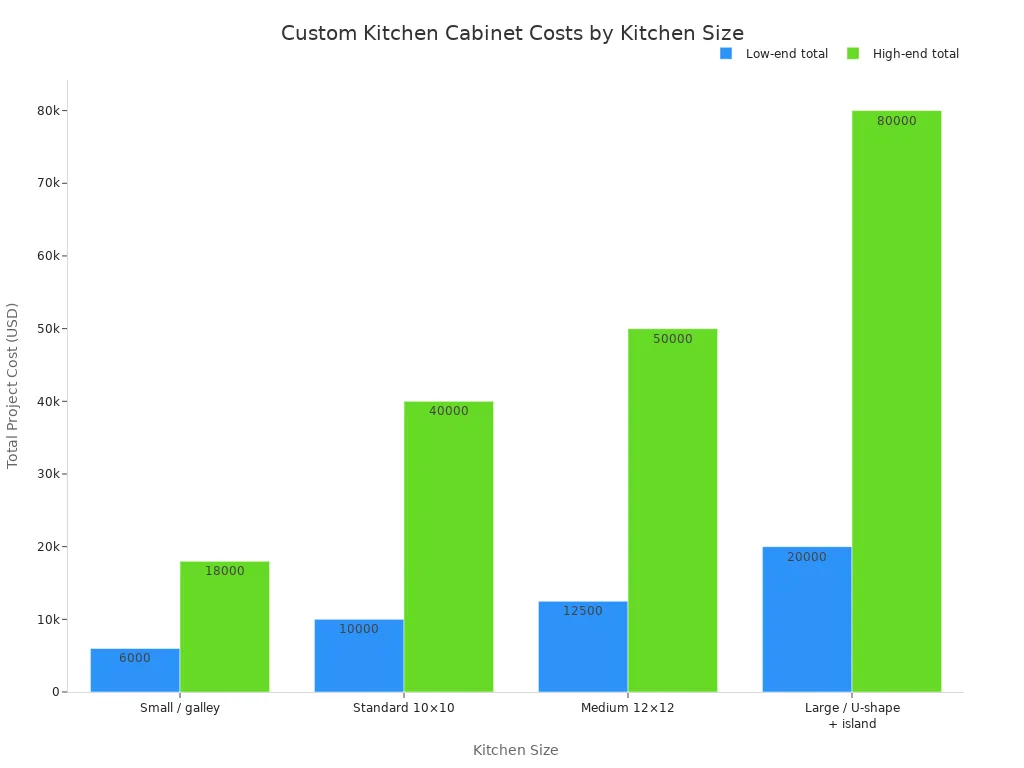
You want a realistic number before you commit. Custom kitchen cabinets in 2026 typically range from $12,000 to $35,000, with luxury-tier work reaching $25,000 to $50,000 or more. That spread reflects kitchen size, material grade, and design detail. A small galley kitchen with 10 to 14 linear feet runs $6,000 to $18,000. A standard 10×10 kitchen with about 20 linear feet climbs to $10,000–$40,000 or more. Medium 12×12 kitchens reach $12,500 to $50,000 or more. Large U-shaped kitchens with an island and 30 to 40+ linear feet start near $20,000 and can exceed $80,000.
| Kitchen size | Approx. linear feet | Low-end total | High-end total |
|---|---|---|---|
| Small / galley | 10–14 ft | $6,000 | $18,000 |
| Standard 10×10 | 20 ft | $10,000 | $40,000+ |
| Medium 12×12 | 25 ft | $12,500 | $50,000+ |
| Large / U-shape + island | 30–40+ ft | $20,000 | $80,000+ |
For a standard 10×10 kitchen, custom cabinets alone typically total $15,000–$25,000+. Professional installation adds $1,500–$4,000. Your installed total lands near $16,500–$29,000+. These figures help you set a baseline before you request quotes.
Per-Linear-Foot Pricing Breakdown
Linear-foot pricing gives you a cleaner way to compare suppliers. The cost of custom cabinetry usually falls between $500 and $1,200 per linear foot installed. Some high-end builds push past that ceiling.
For fully custom cabinetry, recent data shows pricing typically falls in the range of $500 to $1,200 per linear foot.
Stock and ready-to-assemble options cost far less. Semi-custom sits in the middle. The table below shows how each tier compares for a typical 20-linear-foot kitchen.
| Cabinet Type | Cost Per Linear Foot (Installed) | Typical Kitchen (20 LF) |
|---|---|---|
| Stock / Ready-to-Assemble | $100 – $300 | $2,000 – $6,000 |
| Semi-Custom | $150 – $650 | $3,000 – $13,000 |
| Fully Custom | $500 – $1,200 | $10,000 – $24,000 |
You can also compare by total project: a typical 20-linear-foot kitchen with fully custom cabinets runs $10,000–$24,000. Larger and luxury-tier builds reach $25,000–$50,000 or more. These ranges help you spot quotes that fall outside normal custom cabinet pricing. When you ask how much do kitchen cabinets cost, always confirm whether the figure includes installation, hardware, and delivery. That single question prevents most budget surprises.
What Drives Custom Kitchen Cabinets Cost
Materials and Wood Species
Material selection shapes your custom kitchen cabinets cost more than any other single decision. Solid wood remains the dominant choice, selected by 72% of homeowners replacing cabinetry in 2025. This preference signals strong demand for durability and perceived quality.
| Material | Cost | Durability | Maintenance |
|---|---|---|---|
| Plywood | Moderate | High | Moderate |
| Particleboard | Low | Low (moisture-prone) | Needs extra paint finishes |
| MDF | Initially low | Moderate | Can rise due to refacing/coatings |
| Solid Wood | High | Very high (natural grain, longevity) | Low, but high upfront cost |
Plywood uses thin wood veneer layers bonded with alternating grain directions. This construction increases strength and reduces splitting. Multi-layer birch plywood takes this further with a 7-layer build that resists warping, splitting, and shrinkage even under fluctuating temperature and humidity. The layered build allows larger doors, flat panel styles, and custom configurations that may not be practical with solid wood alone.
Plywood costs more than MDF in a direct side-by-side comparison. MDF sheets typically run $30 to $60 per sheet, which explains why some cabinet makers choose it. Using a plywood cabinet box raises the initial material cost of custom cabinets, while an MDF box lowers that upfront cost. However, MDF moisture damage can shorten its lifespan dramatically in humid kitchens.
Wood species also shift the cost of custom cabinets. Maple and red oak sit at the accessible end of the premium spectrum. Cherry commands higher prices due to slower growth, limited supply, and a more luxurious appearance.
| Wood Species | Grain / Tone | Best Suited Style |
|---|---|---|
| Oak | Pronounced grain, rugged character | Traditional / farmhouse |
| Maple | Lighter color, finer grain | Modern / transitional |
| Cherry | Rich color, smooth texture | Formal / elegant |
Engineered wood cabinetry can cost 20–30% less than natural hardwood alternatives. Premium cabinets use dovetail joinery and multi-step finishing processes that create depth and durability. Budget options typically rely on simpler mechanical fasteners and single-step finishes.
Size, Layout, and Design Complexity
Kitchen dimensions and layout complexity drive custom cabinetry costs just as much as materials. Larger kitchens add total linear feet, but layout complexity often matters more than raw size. Islands, multiple corners, tall pantry walls, and ceiling-height runs increase installation labor and per-project cost.
Tall cabinets are measured differently. A 3-foot pantry can count as 3 lower linear feet plus 6 upper linear feet, raising the priced footage. Custom sizing in 1/8-inch increments also adds manufacturing and fitting labor compared with standard stock sizes.
Design details raise per-foot cost even when two kitchens share identical linear footage. Upgraded storage, soft-close hardware, waterfall ends, decorative panels, and filler strips all add to the total. Contemporary custom cabinetry designscost roughly 30% more than traditional versions. More intricate kitchen layouts can extend labor hours by up to 40%.
Craftsmanship and precision engineering represent premium cost drivers. Fully custom work demands exact tolerances, hand-fitted joinery, and careful finishing. These steps take time, and that time appears in your final kitchen cabinet cost.
Custom vs. Stock vs. Semi-Custom Cabinets
Cost and Value Comparison
You can compare the three tiers on price, construction, and lifespan. The table below shows installed pricing per linear foot for a typical kitchen with about 20 linear feet of cabinetry.
| Cabinet category | Installed cost per linear foot | Typical lifespan |
|---|---|---|
| Stock / Ready-to-assemble | $100–$300 | Varies |
| Semi-custom | $150–$650 | Varies |
| Fully custom | $500–$1,200 | Varies |
Construction quality separates these tiers as much as price does. Budget options typically rely on simpler mechanical fasteners and single-step finishes, while premium cabinets use dovetail joinery and multi-step finishing processes that create depth and durability. These differences explain why the cost of kitchen cabinets climbs so sharply at the top tier.
Semi-custom cabinets are worth the money for most homeowners because they balance cost, quality, and personalization better than stock or fully custom options.
When Custom Is Worth the Premium
Custom cabinetry earns its premium in specific situations. Odd layouts top the list: unusual ceiling heights, angled walls, and unusually narrow or wide runs fall outside standard semi-custom dimensions. A specific wood species, a hand-applied finish, or a one-of-a-kind design also requires custom production. Ultra-premium homes where the kitchen serves as a showcase space justify the longer design-build process.
The term “custom” itself stays vague across the industry. True custom means built to your exact measurements with no size limits, not a semi-custom line with a few upgraded options. Ask any supplier which category their product actually fits before you compare kitchen cabinet prices.
Resale value depends on the scope of the remodel and the local market. Buyers reward a fresh, functional kitchen rather than custom-branded cabinetry. In mid-range neighborhoods, stock or semi-custom usually delivers better returns. Custom matters most in luxury markets or a forever home.
Additional Kitchen Cabinet Costs to Expect
Installation and Labor Rates
Your cabinet boxes represent only part of the kitchen cabinet cost. Installation and labor costs add a significant layer. For a standard 10×10 kitchen, professional installation adds $1,500 to $4,000. Site preparation adds more to your total cost. Old-cabinet removal, disposal, wall repairs, floor protection, and electrical or plumbing work can all add to your final bill, and unexpected issues behind walls can create further expenses. A budget contingency helps cover those surprises.
A reputable supplier can offer on-site measurement and pre-assembly. This service reduces on-site labor surprises and helps you avoid costly delays during installation.
Hardware, Finishes, and Add-Ons
Hardware upgrades push your kitchen cabinet costs higher. Soft-close hinges, dovetail drawers, and premium knobs and pulls add extra beyond standard options. Custom orders and labor complications can push costs well beyond the original quote. Your timeline may vary by supplier and design complexity, which increases disruption-related costs.
Wall patching and flooring repair are likely after demolition. Replacement cabinet warranties are often limited and rarely cover labor, leaving future repair costs to you. A professional factory-applied finish requires specialized spray equipment. Without it, a DIY finish can produce brush marks, lap lines, and uneven sheen, requiring additional materials and rework.
How to Budget for Custom Kitchen Cabinets Cost
Setting a Realistic Budget
You need a clear number before you shop. Start with your total kitchen remodel budget. Cabinets and labor rank among the largest expenses in any remodel, so set a benchmark before you compare quotes.
- Allocate a share of your total project budget to cabinetry.
- Treat this as your ceiling, not your target.
For a medium 12×12 kitchen, custom cabinetry alone often runs $12,500 to $50,000 or more. A standard 10×10 kitchen runs $10,000 to $40,000 or more. These figures cover cabinets only. They exclude countertops, appliances, and installation. Your total cost will climb once you add those items.
Saving Money Without Cutting Quality
You can lower the cost of custom cabinets without sacrificing durability. Choose semi-custom cabinets instead of full custom. This option balances flexibility and price. Stick to standard sizes to avoid extra fabrication and labor charges. Limit custom features like built-in appliance panels or specialty storage. Select cost-effective materials such as MDF with durable finishes rather than solid premium woods.
Prioritize high-use areas. Spend more on the cabinets you touch every day. Choose durable materials over trendy finishes that may date quickly. Compare contractor bids line-by-line rather than picking the lowest number. Understanding where subcontractor costs differ can save money without reducing quality.
A design service can help you visualize your space before you commit. You can see exactly where your custom kitchen cabinet cost goes and adjust your plan early. That preview prevents expensive changes later and keeps your kitchen cabinet cost under control.
Getting Accurate Quotes from HenLeap Home and Other Suppliers
What to Include in a Quote Request
A complete quote request helps suppliers return accurate custom cabinet pricing. Start with your cabinet drawings or floor plan. Include wall lengths, ceiling height, and the location of doors, windows, appliances, plumbing, and electrical outlets. Note corners, obstructions, and any areas planned for tall or pantry cabinets. These details let the supplier recommend a practical layout.
You should also share your project location, construction stage, and preferred style. List each cabinet’s intended use, such as kitchen, closet, laundry, or bar. Provide an itemized cabinet list covering boxes, doors, drawer fronts, panels, fillers, toe kicks, trim, hardware, and storage accessories. State whether you need assembly, shipping, or installation. This information shapes your kitchen cabinet cost estimate.
Our Free Design Service offers expert guidance and custom plans based on your accurate measurements, so you can confidently order the perfect cabinetry for your space.
Questions to Ask Before Signing
Before you commit, clarify what the written warranty covers. Ask about cabinet boxes, doors, drawer boxes, hardware, finish, and installation labor separately. Request a line-item breakdown for materials, fabrication, delivery, installation, and permits. Confirm what demolition and disposal include. Ask for the change order policy in writing.
Delivery terms matter too. Find out whether the quote includes first-floor drop, jobsite delivery, or threshold only. Ask about lead time and actual average lead time from last quarter. Confirm whether the cost to install custom cabinets includes leveling, shimming, and anchoring. Ask if plumbing and electrical disconnect are included or handled by licensed trades.
End-to-end service—on-site measurement, design, production, pre-assembly, packing, delivery, and after-sales support—reduces surprises and keeps your kitchen cabinet prices predictable.
ROI and Long-Term Value of Custom Cabinets
Resale Value Impact
Resale returns vary by project scope, local market, and the quality of the finished kitchen. The table below shows the scope categories typically considered when estimating the return you can expect.
| Remodel scope | Avg. job cost | Resale value added | Cost recouped |
|---|---|---|---|
| Minor remodel (keep boxes, replace fronts, new appliances, counters, flooring) | Varies | Varies | Varies |
| Major remodel, midrange (all new cabinets, layout updates, mid-grade finishes) | Varies | Varies | Varies |
| Major remodel, upscale (custom cabinetry, structural changes, premium appliances) | Varies | Varies | Varies |
A minor kitchen remodel keeps your existing cabinet boxes. You replace only the fronts, drawer fronts, and hardware.
Resale returns vary with project scope and local market conditions.
Buyers reward a fresh, functional layout more than a premium brand name.
Durability and Cost-Per-Year
Durability drives long-term value more than any other factor. Construction quality separates the tiers: budget options typically rely on simpler mechanical fasteners and single-step finishes, while premium cabinets use dovetail joinery and multi-step finishing processes that create depth and durability. That durability can lower the effective cost over time.
| Cabinet Type | Average Lifespan | Key Construction Notes |
|---|---|---|
| Stock | Varies | Simpler mechanical fasteners and single-step finishes |
| Semi-Custom | Varies | Mid-range materials and finishes |
| Custom | Varies | Dovetail joinery and multi-step finishing processes |
A well-built custom installation can serve for decades, lowering its effective cost per year and avoiding premature replacements.
Keep these 2026 ranges in mind. The cost of custom cabinets varies widely: fully custom per-linear-foot pricing lands between $500 and $1,200+, while a standard 10×10 project typically totals $16,500–$29,000+ installed. Larger projects exceed $40,000.
| Kitchen size | Linear feet | Estimated cost range |
|---|---|---|
| Small / galley | 10–14 | $6,000–$18,000 |
| Standard 10×10 | 20 | $10,000–$40,000+ |
| Large / U-shape + island | 30–40+ | $20,000–$80,000+ |
Quality custom cabinetry emphasizes durable construction, which can lower the long-term cost of ownership. That durability makes them a smart investment for many homeowners. For your custom kitchen, gather multiple quotes and consult a professional to confirm your total cost. Contact a supplier for tailored pricing and design guidance.
FAQ
How much do custom kitchen cabinets cost per linear foot?
You can expect to pay $500 to $1,200 or more per linear foot for fully custom cabinetry. This range covers the cabinet boxes, doors, and standard hardware. Your final cost depends on material grade, design complexity, and whether installation is included.
Are custom cabinets worth the investment compared to semi-custom?
Custom cabinets emphasize dovetail joinery and multi-step finishing, which can make them a better long-term investment than semi-custom. Custom work pays off best in odd layouts, luxury homes, or kitchens you plan to keep long-term.
What hidden expenses should I budget for beyond the cabinets themselves?
Professional installation adds $1,500 to $4,000 for a standard 10×10 kitchen. Old cabinet removal, site prep, wall repairs, and electrical or plumbing adjustments can add to your total. Set aside a contingency for surprises behind walls.
How long does it take to receive custom cabinets after ordering?
Lead times vary by supplier and design complexity. Ask your supplier for their actual average lead time before you commit to a timeline.
Can I lower my cabinet costs without sacrificing quality?
Yes. Choose semi-custom cabinets, stick to standard sizes, and limit specialty features. Prioritize high-use areas and pick durable materials over trendy finishes. A supplier’s design service can help you plan within budget.